Company of the week: Proxima Biosciences
Biotechnology startups often promise to "drug the undruggable," but few have embraced that challenge as boldly as Proxima Biosciences. This venture—born from an unlikely marriage of an Australian academic spin-out and a New York AI company—is developing medicines akin to a "highly specialised 'garbage truck' for cells," as one early profile described it.
Instead of merely blocking a single culprit protein, Proxima's therapies aim to reprogram protein interactions themselves, tagging disease-causing proteins for removal or forcing new interactions that disable disease pathways. In theory, this could neutralize previously intractable targets in cancer and autoimmune disease by eliminating "molecular trash" at the cell surface or by gluing together intracellular proteins in just the right way to shut down illness. It's an ambitious vision—and one that has swiftly attracted both deep-pocketed investors and blue-chip pharma partners.
Core Technologies and Platform
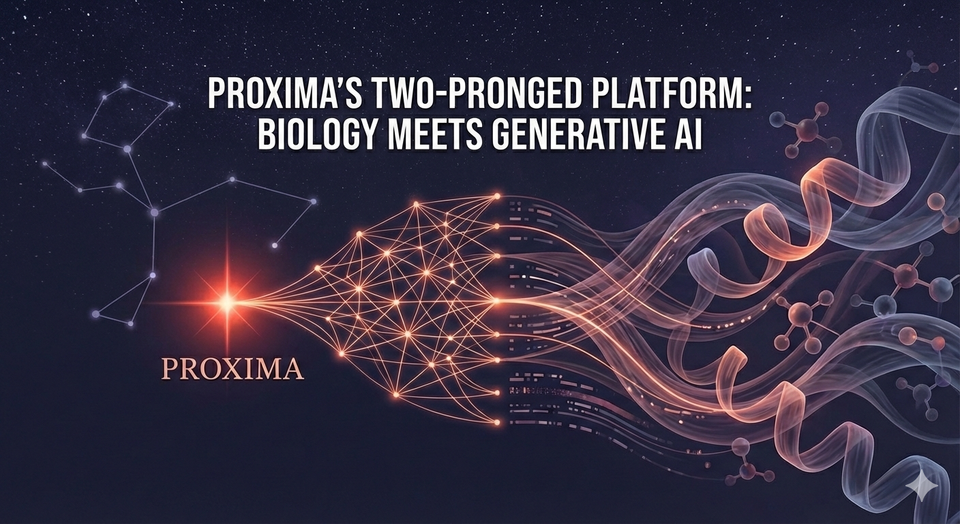
At the heart of Proxima's strategy is a two-pronged platform melding cutting-edge protein engineering biology with generative AI.
Cell Surface Degraders
On the experimental side, Proxima's scientists are inventing "cell surface degraders"—biotechnological two-headed molecules (often built from VHH nanobody fragments) that bind a pathogenic protein on a cell's exterior with one hand and a component of the cell's ubiquitin-tagging machinery with the other. By hijacking the cell's own protein-recycling system, these bi-specific degraders mark the target for destruction, causing the disease protein to be internalized and destroyed like a piece of cellular garbage.
This concept is analogous to emerging extracellular degradation technologies (e.g., LYTACs and ATACs) that drag unwanted proteins to the cell's lysosome. Proxima, however, emphasizes ubiquitin-mediated removal, effectively bringing proteasomal cleanup to the cell surface—a novel twist on targeted protein degradation. Early descriptions tout the potential for more potent, cell-specific, and less toxic effects than traditional inhibitors, since only cells bearing the target antigen will have that protein "hoovered up" from their surface.
The Neo AI Platform
Complementing this biologics platform is Proxima's formidable AI/ML engine, inherited from its former incarnation as VantAI. The company's generative AI model series (nicknamed "Neo") is designed to make protein–protein interactions programmable, treating drug design as a complex three-body problem: two proteins plus a prospective small-molecule glue.
Traditional drug discovery might first determine a protein's structure, then find a molecule to bind it—but for proximity modulators, the stable binding interface often exists only when two proteins and a bridging molecule come together. Proxima claims Neo-1 is the first AI model to simultaneously co-fold two proteins and generate a fitting ligand in one go.
Trained on a vast proprietary atlas of protein interactions—including proteome-wide data from cross-linking mass spectrometry (its NeoLink platform)—Neo can propose novel small molecules that induce, stabilize, or block specific protein complexes. In essence, the AI explores uncharted regions of the human "interactome," where fewer than 5% of protein-protein interactions have been structurally mapped. By combining proteome-scale structural data with frontier AI, Proxima aims to vastly expand the druggable universe beyond traditional active sites.
Platform Components Summary
| Component | Function | Key Differentiator |
|---|---|---|
| Cell Surface Degraders | Bispecific nanobody-based molecules that recruit ubiquitin ligases to membrane proteins | First platform using ubiquitin-mediated degradation at the cell surface |
| Neo AI Models | Generative AI that co-folds two proteins and designs bridging ligands simultaneously | Solves the three-body problem of proximity drug design |
| NeoLink | Cross-linking mass spectrometry platform generating proteome-wide structural interaction data | Proprietary dataset covering interactions not mapped elsewhere |
Scientific Novelty and Approach
The scientific novelty of Proxima's platform lies in uniting these approaches. On one side, its biologic degraders extend targeted protein degradation to membrane proteins—an area where few companies (aside from peers like Lycia and Avilar) operate. On the other side, its AI-driven small-molecule discovery seeks to rationalize the finding of "molecular glue" compounds, historically discovered mostly by serendipity.
Notably, Proxima's approach builds on emerging success stories in induced proximity medicine: for example, molecular glues like Revolution Medicines' RAS inhibitor (RMC-6291) that wedge themselves between two proteins to stop cancer signaling, or heterobifunctional PROTAC degraders that tag intracellular proteins for destruction. By focusing on rational design instead of trial-and-error, Proxima hopes to systematically discover new glues and chimeras where others stumble in the dark.
The presence of luminaries like Prof. Michael Bronstein—a pioneer of geometric deep learning—guiding Neo's development underscores the company's deep technological bet. His algorithms enable Neo to reason over molecular shapes and interactions in atomic detail, conceiving compounds that could "lock" two proteins together or prevent them from locking at all. This powerful toolkit is already yielding drug candidates: Proxima reports that multiple co-designed molecules from its platform are advancing in partnered pipelines, with the first clinical trial slated to start in 2026.
Pipeline and Scientific Progress
Proxima's internal product pipeline remains early-stage and largely under wraps, but its broad contours reflect the platform's dual nature.
Biologic Degrader Programs
On one front, the Melbourne R&D team (built by co-founders Dr. Jase Brouwer and Dr. Jon Bernardini) is advancing preclinical biologic degraders against cell-surface targets implicated in cancer and autoimmune diseases. These likely include refractory signaling proteins or receptors that traditional drugs can't safely inhibit.
By late 2025 the company had grown its wet-lab team and was reportedly aiming to initiate first-in-human trials within 3–4 years, implying a lead candidate could enter IND-enabling studies by 2027. While specific targets aren't disclosed publicly, the focus on inflammatory pathways (e.g., in rheumatoid arthritis or lupus) and oncology is clear from the founders' backgrounds and advisor mix. For example, one advisor is a leading rheumatologist and lupus expert, hinting that Proxima may pursue degrader therapies to tame aberrant immune signaling in diseases like SLE. Another advisor's expertise in deubiquitinase enzymes and endosomal trafficking suggests interest in the ubiquitin system's role in cancer—knowledge directly relevant to engineering effective degrader constructs.
Although detailed preclinical results have not been made public, Proxima likely follows the playbook of other degrader companies by demonstrating target engagement and degradation in cell-based assays and animal models. Achieving in vivo proof-of-concept (for instance, shrinking tumors or modulating immune markers in mice) will be an important milestone to de-risk its biologic candidates, much as Avilar showed with its ATAC degraders in rodents and primates.
AI-Driven Small-Molecule Pipeline
Concurrently, Proxima's AI-driven small-molecule pipeline is progressing through a series of external partnerships and internal discovery projects. The company has built a "robust and mechanistically differentiated" portfolio of programs targeting traditionally intractable proteins. Each program pairs a target protein (often one lacking any conventional binding pocket) with an appropriate effector protein—such as an E3 ligase, a scaffolding protein, or even another signaling node—that a small molecule could bridge together.
Key Partnership Programs
| Partner | Program Focus | Status | Potential Value |
|---|---|---|---|
| Halda Therapeutics | RIPTACs—"hold-and-kill" molecules targeting novel protein pairs | Discovery phase; Halda's HLD-0915 in Phase 1 | Over $1B in milestones |
| Blueprint Medicines | Molecular glues and degraders for undruggable cancer targets | Multiple programs, expanded twice | Up to $1.67B in milestones |
| Bristol Myers Squibb | Molecular glues for oncology | Ongoing discovery | Up to $674M in milestones |
| Janssen (J&J) | Glues and degraders | Initiated 2022 | Terms undisclosed |
The Halda collaboration is particularly noteworthy. In this partnered project, Proxima's platform is identifying novel target–effector pairs for Halda's "hold-and-kill" small molecules that bind a tumor-specific protein (like mutant androgen receptor) and tether it to a second protein essential for cell survival. The goal is a ternary complex that lethally miswires cancer cells, and Halda's first such drug (HLD-0915 for prostate cancer) is already in Phase 1 trials. Proxima's contribution has been to systematically propose new combinations of protein targets and "effector" molecules that could yield similarly selective tumor cell killing.
The Blueprint Medicines collaboration has expanded twice due to rapid progress, now covering multiple programs. Such deals suggest Proxima's pipeline is yielding candidates good enough for big pharma to carry forward. Indeed, Proxima boasts that "multiple co-developed programs" with partners are advancing toward the clinic, with the first slated to enter human trials by late 2026.
While cautious investors will note this timeline is driven largely by partner programs (not yet Proxima's own in-house drug), it provides an important validation: if a Bristol Myers Squibb or Janssen is willing to bet a development budget on a Proxima-designed molecule, the technology is passing real-world tests. In the best case, the coming 1–2 years could see the first proximity-based medicine from Proxima's platform enter clinical development, marking a major scientific inflection point for the company.
Business Model and Commercial Strategy
Proxima's business model straddles a platform play and a product play. In the near term, the company monetizes its AI platform by partnering with established pharmaceutical firms on high-value discovery projects; in the longer term, it aspires to develop and commercialize its own proprietary therapeutics.
Collaborations and Licensing
Proxima has assembled an impressive roster of big pharma alliances that bring in nondilutive capital, R&D funding, and milestone opportunities. These deals effectively license Proxima's discovery engine to tackle targets chosen by the partner.
| Deal | Initiation | Structure | Potential Milestones |
|---|---|---|---|
| Bristol Myers Squibb | VantAI era | Molecular glues for oncology | Up to $674M |
| Janssen (J&J) | 2022 | Glues and degraders | Undisclosed |
| Blueprint Medicines | Expanded 2025 | Four target programs | Up to $1.67B |
| Halda Therapeutics | 2025 | RIPTAC target discovery | Over $1B |
Notably, Halda's subsequent acquisition by J&J in mid-2025 (for $3B) underscores how attractive these next-gen degrader modalities have become. For Proxima, each partnership typically provides upfront payments, R&D support, and downstream royalties—essentially multiple shots on goal at blockbuster drugs, funded by larger partners. The cumulative value of Proxima's signed deals already reaches into the billions (biobucks), a remarkable feat for a young company and a form of external validation of its platform.
Internal Pipeline Strategy
While platform collaborations generate revenue and credibility, Proxima's endgame is to be more than a service provider. The company explicitly frames itself as building a "mechanistically differentiated internal pipeline" alongside partner projects. This means it selects certain high-impact targets to pursue on its own—likely ones that align with its core focus areas (e.g., a first-in-class degrader for a major immuno-oncology target).
The strategy is classic biotech: advance an internal drug candidate through preclinical and early clinical trials, then consider either licensing it to a commercial-stage pharma or building its own commercialization capabilities if the asset (and company) are mature enough. Given Proxima's current size and early stage, a prudent path to market for its first products would be via licensing or co-development with a larger pharma after Phase 1 or 2, in exchange for upfront and milestones. This de-risks the costly Phase 3 and marketing phase. However, if its platform yields multiple product opportunities, Proxima could eventually aim to launch products itself in niche markets—especially in oncology where a small, targeted field force can suffice.
Manufacturing Considerations
As an R&D-stage company, Proxima does not yet have in-house manufacturing, but it is already thinking about scalability of its modalities. Small-molecule glues and degraders can be made by established synthetic chemistry routes or outsourced to contract manufacturers fairly straightforwardly.
The more unique challenge is with Proxima's biological degraders (bispecific nanobody-based molecules). Those will require protein expression systems and purification; fortunately, there's ample precedent in the industry (bispecific antibodies, antibody–drug conjugates, etc.) that Proxima can leverage by partnering with contract development and manufacturing organizations (CDMOs).
The involvement of Tenmile—the venture arm of CSL, a major protein therapeutics manufacturer—as an early investor suggests Proxima has connections to large-scale biologics expertise. The Jumar Bioincubator facility in Melbourne provides shared infrastructure for lab-scale bioprocessing and analytics, which helps at this stage.
Financial Runway and Burn Rate
Proxima's funding history reflects its hybrid model:
| Funding Stage | Source | Amount | Purpose |
|---|---|---|---|
| Initial Grants | MRFF via Brandon BioCatalyst CUREator | Non-dilutive | Platform development |
| Seed (Australia) | 66ten fund, Tin Alley Ventures, Tenmile | ~A$1-2M (est.) | Core team, Melbourne operations |
| Seed (Rebrand) | DCVC-led, NVIDIA NVentures, Roivant, Braidwell, Alexandria | $80M | Scale operations, clinical advancement |
The big financial inflection came in January 2026, when Proxima (having rebranded from VantAI) announced an $80M "oversubscribed seed" financing led by DCVC. This unusually large round for a seed stage included marquee tech-biotech investors. In DCVC's words, it was their largest ever TechBio seed investment—a strong vote of confidence in Proxima's approach.
With $80M fresh in the bank, plus whatever upfront payments have come from partners, Proxima is well-capitalized going into 2026. Even accounting for a likely increase in burn rate (hiring computational scientists, biologists, and scaling laboratory studies on two continents), this funding should provide a runway of 2–3 years at minimum. The company had ~13 employees in Melbourne as of early 2025 and likely a similar or larger contingent in its U.S. operations; assuming it doubles headcount post-fundraise and invests heavily in compute and lab expansion, its annual burn might be in the low tens of millions—making $80M a healthy war chest for hitting key milestones before needing another raise.
Competitive Landscape
Proxima operates at the intersection of two active arenas—targeted protein degradation (TPD) and AI-driven drug discovery—and faces competition from both traditional biotech players and AI-focused upstarts.
Targeted Protein Degradation Peers
This field has expanded significantly in the last five years with companies finding new ways to destroy or disable problem proteins. Proxima's closest analogs are those pursuing induced proximity solutions beyond conventional PROTACs.
Arvinas (USA) pioneered PROTAC degraders and has two clinical candidates: ARV-110 (for prostate cancer) and ARV-471 (for breast cancer, co-developed with Pfizer) now in Phase 2/3 trials. Arvinas's success (ARV-471 showed promising efficacy and safety as an estrogen receptor degrader) has validated the idea that co-opting cellular disposal mechanisms can yield viable drugs. However, Arvinas relies on known intracellular ligases (like cereblon) and doesn't directly address membrane targets.
Lycia Therapeutics (USA) and Avilar Therapeutics (USA) are two venture-backed startups explicitly targeting extracellular or membrane proteins—much like Proxima's "cell surface degrader" concept. Lycia's LYTAC platform uses bi-functional molecules that bind a target and the lysosomal-trafficking receptor CI-M6PR, sending the target for degradation in lysosomes. Lilly was impressed enough to ink a partnership worth up to $1.6B with Lycia in 2021. Avilar, similarly, raised $60M to launch its ATAC platform that links targets to ASGPR (a liver lectin) to clear them from circulation.
Both Lycia and Avilar remain preclinical, but they underscore a competitive trend: big pharma sees value in degrading secreted or surface proteins (for oncology, fibrosis, immunology), and multiple approaches are being tried. Proxima's edge in this subfield is its use of ubiquitin ligases at the surface rather than lysosomal shuttling; if successful, this could offer more specificity or faster protein clearance, but it's unproven relative to the lysosomal paths Lycia/Avilar use. Notably, no other company has publicly described using bispecific biologics to recruit ubiquitination at the cell surface—this might be a unique IP space Proxima can occupy if their WEHI-derived science holds up.
Molecular Glue Arena
In the small-molecule molecular glue arena, Proxima faces off against both biotech firms and internal teams within pharma.
Monte Rosa Therapeutics (USA) is a prominent player using a mix of phenotypic screening and structure-based design to find molecular glues that cause selective protein degradation. Monte Rosa's lead glue (targeting GSPT1, a previously "undruggable" transcriptional regulator) is entering clinical trials for cancer, and Roche paid $50M upfront for options on that and other candidates.
C4 Therapeutics (USA) focuses on bifunctional degraders (and has deals with Biogen and Roche) but also explores molecular glues. Kymera Therapeutics (USA) similarly has PROTAC programs in the clinic (IRAK4 and STAT3 degraders) and partnerships with Sanofi and Vertex.
Among AI-focused entrants, Proxygen (Austria) uses a chemoproteomics screening platform to discover glues and has secured partnerships with Merck & Co. and Boehringer Ingelheim. SyntheX (USA) uses a synthetic biology approach to identify new molecular glue interactions and signed a $550M deal with BMS in 2022.
Compared to these, Proxima's differentiator is its heavy use of in silico generative design guided by unique structural data—a more computationally driven approach versus wet-lab screening. If Proxima's AI can reliably output novel glue candidates in silico, that could leapfrog the trial-and-error of competitors; however, until a Proxima-designed compound proves potent and selective in vivo, the jury remains out.
Competitive Comparison Table
| Company | Modality Focus | Platform & Approach | Pipeline Status (2026) | Notable Partnerships |
|---|---|---|---|---|
| Proxima Biosciences | Proximity modulators (molecular glues, degraders) for intracellular & cell-surface targets | Generative AI-driven design (Neo AI models) + proprietary proteome-wide structural data (XL-MS via NeoLink); biologic bispecific degraders recruiting ubiquitin ligases on cell surface | Preclinical (internal programs in oncology & immunology); multiple small-molecule programs co-developed with partners—first clinical entry expected 2026 via partnered trial | BMS ($674M); Janssen (undisclosed); Blueprint (up to $1.67B); Halda (up to $1B, now J&J) |
| Arvinas (USA) | PROTAC small-molecule degraders (intracellular targets) | Hetero-bifunctional molecules linking targets to E3 ligases (e.g., cereblon); pioneered field with strong IP | 2 clinical candidates: ARV-110 (androgen receptor degrader, Phase 2) and ARV-471 (estrogen receptor degrader, Phase 3); early programs in oncology and neurology | Pfizer (co-developing ARV-471, $1B+ partnership); Genentech (neuroscience degrader collaboration) |
| Monte Rosa (USA) | Molecular glues for undruggable targets (oncology) | QuEEN discovery platform combining phenotypic screening and structure-guided design of glues that stabilize new protein–protein interactions | Lead glue (GSPT1 agonist glue) IND-approved for solid tumors; additional preclinical programs in oncology | Roche (multiple deals, e.g., $50M upfront in 2022); Broad Institute collaboration on glue discovery |
| Lycia Therapeutics (USA) | LYTAC degraders for extracellular & membrane proteins | Bi-specific conjugates: antibody or peptide binders attached to polymers that recruit lysosomal targeting receptor (CI-M6PR), causing target protein internalization and degradation | Preclinical; lead programs in immunology and oncology (degrading pathogenic extracellular proteins) | Eli Lilly (five-target collaboration, $35M upfront, up to $1.6B in milestones) |
| Avilar Therapeutics (USA) | ATAC degraders for secreted & extracellular proteins | Small-molecule conjugates: one moiety binds target protein, the other binds ASGPR on hepatocytes, rerouting target for lysosomal degradation in liver | Preclinical; in vivo proof-of-concept achieved in rodents and primates; pipeline targets not yet disclosed publicly | RA Capital-backed startup (seed $60M); no public pharma partnerships yet |
| Halda Therapeutics (USA) | RIPTAC "hold-and-kill" heterobifunctionals (conditional lethality) | Small molecules that tether a "housekeeping" protein to a disease protein in a defined orientation, creating a neomorphic lethal complex that kills target cells; does not rely on degradation—instead induces a toxic interaction | Lead RIPTAC HLD-0915 in Phase 1/2 for metastatic prostate cancer; additional pipeline programs in oncology | J&J (acquired Halda in 2025 for $3B); Proxima (discovery collaboration for next-gen RIPTAC targets, ~$1B potential) |
Big Pharma Activity
In addition to the biotech competitors, pharmaceutical giants are circling this field. Companies like Roche, Novartis, GSK, and Pfizer have all made moves (through partnerships or internal programs) in targeted protein degradation and AI drug design. This means Proxima not only competes for technical success, but also for talent and partnership dollars. Roche's deal spree in 2022–2023 included Monte Rosa and Orionis Biosciences for molecular glues, and Merck has partnered with Proxygen and invested in Kymera.
If Proxima can continue to demonstrate technological advantages—such as solving targets others cannot, or dramatically accelerating discovery timelines—it will maintain an edge in attracting top-tier partners and perhaps become an acquisition target itself. The J&J takeover of Halda and Pfizer's large stake in Arvinas's program show that big pharma will pay handsomely for best-in-class degrader technology. Proxima's recent rebranding and $80M financing suggest it is positioning to join the ranks of globally recognized leaders in this domain.
Risk Analysis
From a skeptical perspective, several factors temper the enthusiasm around Proxima Biosciences:
Unproven Biology—Novel Modality Risks
Proxima's cell-surface degrader concept is innovative but fundamentally unproven in humans. No drug on the market (to date) works by recruiting a ubiquitin ligase to an extracellular protein. This is high-risk, high-reward science. There could be unforeseen hurdles: for instance, if the recruited ubiquitin tagging leads to incomplete degradation or triggers compensatory pathways. Membrane proteins might be shed or recycled by the cell in ways that undermine the degrader's effect.
Moreover, the very novelty means regulatory uncertainty—agencies like the FDA have limited precedents to evaluate such biologics. In the worst case, unpredictable immune responses (since Proxima's degraders are biologics that might engage the immune system) or off-tissue effects could arise.
Similarly, the molecular glues that Proxima's AI designs will need to prove they can achieve drug-like properties (cell permeability, stability, specificity). Many past "undruggable" targets remained so because molecules hitting them either weren't specific enough or couldn't get to the right place in vivo. Proxima's rationally designed glues might bind the intended proteins in a test tube, yet still fail due to protein dynamics in cells or metabolic clearance in the body—issues an AI model might not fully predict.
AI/Data Assumptions
Proxima's pitch leans heavily on its proprietary data (the XL-MS derived structural interactome) and Neo AI. However, AI models are only as good as their training data and assumptions. Cross-linking mass spectrometry can map protein contacts, but it has biases (e.g., it might miss interactions in certain cellular compartments or underrepresent transient complexes).
If Neo-1 is trained predominantly on cross-link data, it may generalize poorly to interactions that aren't easily cross-linked or to ligand-induced interactions that have never existed in nature. There's a risk of "garbage in, garbage out": if some training interactions were mis-assigned, the AI could design flawed molecules.
Drug discovery AI is notorious for generating compounds that look good in silico but are chemically infeasible or biologically inactive. The lack of a systematic track record (no published lead compounds or clinical candidates yet from Neo) means we must take Proxima's claims on faith for now. Until external validation—say, a co-designed molecule shows potent in vivo activity in a peer-reviewed study—there is a nontrivial chance the AI approach yields many false leads and requires substantial human iteration.
Execution and Focus Risk
Proxima is attempting a lot simultaneously: an AI platform, multiple big-pharma partnerships, and an internal pipeline spanning two therapeutic areas. Each of those is essentially a full plate for a startup. The danger is execution overload. Managing collaborations with BMS, Blueprint, etc., can consume management bandwidth and force the best scientists to split focus between partners' projects and internal ones.
If not handled carefully, Proxima's internal programs could languish (never reaching IND) because the team is busy servicing partnerships—a classic platform-company trap. The flip side is if they prioritize their own drug projects too much, they might disappoint partners and forego short-term revenue. Striking the balance is hard, and few companies have managed it without stumbles.
Furthermore, the company's dual geography—with leadership and AI efforts stemming from its U.S. origins (ex-Roivant VantAI) and biological R&D in Australia—could pose coordination challenges. Integrating two cultures and teams (the Aussie spin-out's founders and the VantAI crew) carries organizational risk.
Financial Dependencies
While Proxima's $80M raise is impressive, its ambitions are correspondingly large (e.g., running multiple wet labs, a costly AI compute pipeline, and eventually clinical trials). The burn rate is likely to increase significantly as the company moves toward clinical development (manufacturing batches for IND, conducting toxicology studies, etc.).
If capital markets turn unfavorable (noting that biotech funding can be cyclical), Proxima might find itself needing to raise a Series A or B in a tight environment. Its current runway could shrink quickly if any program hits a scientific snag requiring expensive fixes. Moreover, those lucrative partner milestones are mostly back-loaded—tied to clinical or regulatory success that is years away and uncertain.
Upfront payments (typically on the order of $5–15M in such deals) and research funding help, but won't alone sustain large trial budgets. Proxima may be more reliant on raising additional venture capital or eventually going public to finance Phase 2/3 trials for its own drugs.
Competitive Pressure and IP
The crowded competitor landscape means Proxima must move quickly and secure intellectual property. There's a risk that competitors solve the same problems via different means. For example, if Lycia or Avilar gets an extracellular degrader into the clinic first, they could define the regulatory path and tie up key patents on that modality (though Proxima's approach is mechanistically distinct, overlapping claims might arise around specific targets or linker technologies).
On the AI side, an array of startups (big and small) claim to use AI for drug design—it's a hype-filled arena. Proxima has to distinguish real capabilities from hype; if it cannot, it might be lost in the noise or, worse, accused of hype itself.
Risk Summary Table
| Risk Category | Specific Concern | Mitigation Factors |
|---|---|---|
| Biology | Unproven ubiquitin-mediated surface degradation; regulatory uncertainty | Leveraging native cellular processes; multiple modalities hedge bets |
| AI/Data | Model generalizes poorly; in silico compounds fail in vivo | Proprietary XL-MS data; wet-lab validation loops |
| Execution | Platform/product balance; dual geography coordination | Experienced leadership; clear internal pipeline priorities |
| Financial | High burn rate; back-loaded milestones | $80M runway; multiple partner revenue streams |
| Competitive | IP overlaps; crowded AI drug discovery space | Mechanistically distinct approaches; first-mover in surface ubiquitin degradation |
Opportunity Analysis
From a supportive perspective, Proxima Biosciences has assembled many of the ingredients needed to succeed in this emerging space:
Pioneering Science and First-Mover Advantage
Proxima's integration of AI and experimental proteomics gives it a head start in creating a true design engine for proximity drugs. By unifying structure prediction and molecule generation, Proxima is tackling the core technical bottleneck that has limited molecular glue discovery. If Neo-1 works as described, it could churn out drug leads in months rather than the years competitors spend on screening campaigns.
On the biologics front, Proxima's WEHI-originated degrader platform is scientifically novel and multifaceted—it isn't just another me-too PROTAC approach but opens an entirely new modality (membrane protein degradation via ubiquitin). Should this prove effective, Proxima would be the reference pioneer for that modality (much as Arvinas is for PROTACs), with strong intellectual property and know-how that others lack.
The scientific rationale is strong: cells naturally use ubiquitination to regulate membrane proteins (e.g., receptors are ubiquitinated to trigger internalization), so Proxima is leveraging a native cellular process, which often bodes well for drug tolerability and efficacy.
Talent and Team Credibility
Proxima's team includes relevant expertise across domains. Its scientific co-founders Brouwer and Bernardini each spent a decade at the bench in protein degradation science, bringing deep domain knowledge in ubiquitin biology and structural biochemistry. The addition of Dr. Michael Bronstein (DeepMind Professor at Oxford) as Chief Scientist-in-Residence gives heavyweight AI credibility—Bronstein's presence signals that Proxima's AI is built on state-of-the-art machine learning research.
| Role | Individual | Background |
|---|---|---|
| Co-founder | Dr. Jase Brouwer | Decade in protein degradation research |
| Co-founder | Dr. Jon Bernardini | Structural biochemistry and ubiquitin biology |
| Chief Scientist-in-Residence | Prof. Michael Bronstein | DeepMind Professor at Oxford; geometric deep learning pioneer |
| Board Chair | Dr. David Llewellyn | Co-founded and sold DJS Antibodies |
| Advisor | Dr. Rachael Brake | Former CSO, ex-Pfizer executive |
| COO | Amanda Woon | Biotech R&D and venture capital experience |
The board and advisors include veterans from pharma and successful biotechs. Having industry-seasoned leaders involved means Proxima can navigate drug development pitfalls and business strategy shrewdly. This blend of youth and experience, academic insight and industry pragmatism, boosts the team's credibility. Proxima's dual base in Melbourne and the U.S. gives it access to global talent pools—Australian scientists from WEHI plus AI engineers from the Boston/New York biotech scene.
Clinical Momentum via Partners
One of Proxima's strengths is that its technology is already validated externally to an extent. The collaborations with J&J, BMS, and others mean that those partners have vetted Proxima's platform and decided it's worth investing in. Johnson & Johnson's acquisition of Halda effectively means a top-5 pharma is now indirectly partnered with Proxima's discovery efforts—a substantial vote of confidence.
The multi-billion dollar biobucks totals in Proxima's deals indicate these partners see real therapeutic potential in what Proxima is doing. Importantly, some partner programs are nearing the clinic (the first partnered program is "on track to enter clinical trials in 2026"). If/when that happens, Proxima will gain the credibility of having a molecule in human testing derived from its platform. Even though a partner runs the trial, success will reflect back on Proxima and de-risk its approach in investors' eyes. Each clinical milestone met—demonstrating safety, or a pharmacodynamic effect in patients—will be a value-inflection moment.
Intellectual Property and Data Moat
Proxima has a growing IP portfolio (though specifics aren't public, one can infer patents around its NeoLink data processes, AI methods, and degrader constructs). Having spun out from WEHI, it likely licensed foundational patents on the biologic degrader concept from that institute.
Additionally, the proprietary dataset of proteome-scale structural interactions (from cross-linking experiments) serves as a competitive moat. Even tech giants dabbling in AI can't easily replicate that, because it's real wet-lab data accumulated through partnerships and experiments. DCVC explicitly highlighted that combination of state-of-the-art AI + proprietary biological data as a distinguishing hypothesis behind Proxima.
In practice, this means while there are many AI-for-drug-discovery companies, few have unique data that isn't just public or purchasable—Proxima does. Its head start in gathering these "maps" of protein interactions could allow its models to perform better and yield discoveries others simply won't arrive at.
Platform Scalability and Optionality
Proxima's platform is inherently scalable across diseases and target classes. Once the engine is refined, there is little theoretical limit to the number of programs it can take on—especially the in silico half, which can be parallelized. This means the company isn't a one-drug story; it can generate a pipeline that addresses multiple major markets.
The proximity modulation concept has applicability in cancer (forcing tumor suppressors to engage), immunology (degrading autoreactive receptors), neurology (perhaps clearing pathological proteins), and beyond. For investors, this optionality is attractive: Proxima could pivot or expand into any area where an undruggable target is central. The company has mentioned neurodegeneration as a long-term interest (with their AI advisor Dr. Komander being an expert in Parkinson's pathways).
Strong Financial Backing
The $80M seed round and the pedigree of investors (DCVC, NVIDIA, Roivant, Alexandria) speak to high confidence capital behind Proxima. These investors are known for supporting companies through multiple rounds, not just one-off bets.
| Investor | Strategic Value |
|---|---|
| DCVC | Largest TechBio seed investment; Jason Pontin on board |
| NVIDIA NVentures | Access to cutting-edge computing power and AI tools |
| Roivant | Former parent; substantial resources and "Vant" incubation model |
| Alexandria Ventures | Life science real estate and infrastructure expertise |
| Braidwell | Deep biotech investment track record |
Roivant's participation is noteworthy—having spun Proxima out, Roivant still has skin in the game and could bring its substantial resources to help if needed. NVIDIA's strategic investment could give Proxima privileged access to cutting-edge computing power. DCVC bringing Jason Pontin (a seasoned tech and science editor) onto the board adds a savvy communicator and strategist.
Conclusion
Navigating between hype and hope, Proxima Biosciences presents a compelling, if complex, story. The company's approach exemplifies "the programmed pursuit of serendipity"—taking what was once the serendipitous discovery of molecular glues and systematizing it with algorithms, while also reimagining the cell's waste-disposal for therapeutic ends.
Proxima stands at the vanguard of a shift from drugs that merely block biology to drugs that reshape it. Significant risks remain, as with any pioneer. But with scientific ingenuity, strategic partnerships, and substantial capital, Proxima could indeed address some of the most stubborn "undruggable" targets in human disease—turning a grand vision into real-world impact for patients and stakeholders alike.
The next 1–2 years will provide critical proof points as partnered programs advance toward clinical trials and the internal pipeline matures. The company's positioning at the convergence of AI and targeted protein degradation—two of the most active frontiers in drug discovery—creates substantial optionality regardless of which specific programs succeed first.
Key Milestones to Watch
| Timeline | Milestone | Significance |
|---|---|---|
| 2026 | First partnered clinical trial initiation | Platform validation in humans |
| 2027 | Potential IND-enabling studies for internal candidates | Proprietary pipeline advancement |
| 2026-2027 | Partner program clinical readouts | De-risking of AI-designed molecules |
| Ongoing | Additional partnership announcements | Revenue diversification and platform validation |
Disclaimer: I am not a lawyer or financial adviser. Nothing in this article constitutes investment advice or legal advice. This content is for informational purposes only. Readers should conduct their own due diligence and consult with qualified professionals before making any investment decisions.
Member discussion