DISCO Pharmaceuticals: Grooving Through the Cancer Surfaceome
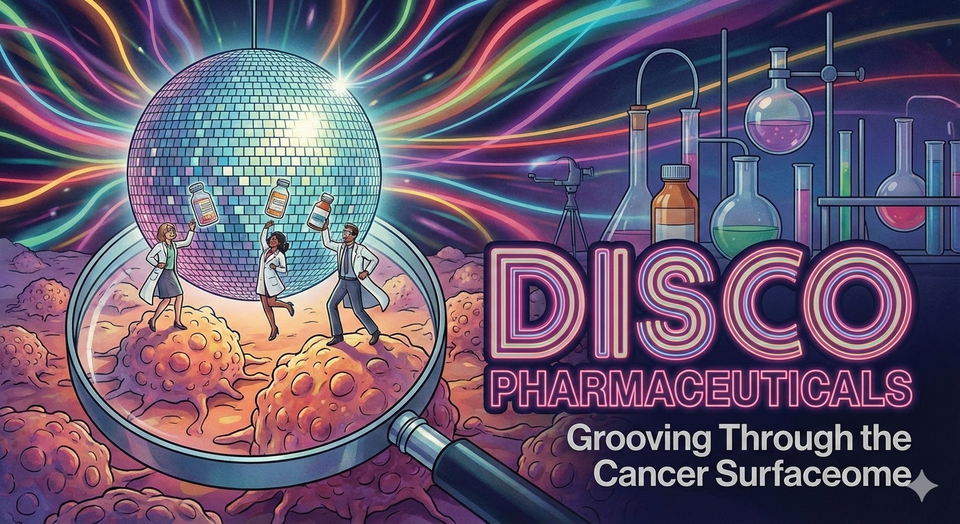
No, they're not selling disco balls—but DISCO Pharmaceuticals certainly knows how to shine in biotech. The company name immediately conjures images of glittering mirror balls and 1970s dance floors, an association the founders clearly embraced given their playful branding. Yet the name carries deeper meaning rooted in classical languages. "Disco" is the first-person singular present active indicative of the Latin verb discere, meaning "I learn" or "I am learning."
The Latin disco shares its Proto-Indo-European root with the Greek didáskō (to teach) and is related to docēre (to teach, from which we derive "doctor" and "doctrine"). For a company whose core mission is discovering new cancer drug targets through systematic learning about the cancer cell surface, the etymology provides an elegant double meaning that manages to be both scientifically apt and memorably irreverent.
Founded in 2022 as a spin-out from ETH Zürich, alongside collaborators from the University of Cologne and Stanford University, DISCO set out to map the "surfaceome"—the complete set of proteins on a cell's surface—for cancer cells.
The company's January 2026 licensing deal with Amgen, valued at up to $618 million in milestone payments plus royalties, represents significant external validation for a preclinical-stage company. Combined with €36 million in seed financing and a pipeline advancing toward IND-enabling studies, DISCO has built meaningful momentum in under four years. Yet as with all early-stage biotechs, the science remains unproven in humans and the path to market is long.
This analysis examines DISCO's technology, team, financing, competitive position, and risks with equal attention to both the bull and bear cases.
Company Overview
Operating from Cologne, Germany and Schlieren, Switzerland, DISCO emerged from stealth in January 2024 with a mission to unlock new drug targets on cancer cell surfaces. By comprehensively decoding the surface protein landscape of tumor cells, the company identifies previously inaccessible antigens and even pairs of targets that can be attacked simultaneously. This approach addresses a fundamental limitation in oncology drug development: currently, fewer than 30 molecular targets form the basis of all approved antibody-based therapies. DISCO aims to bring new moves to an oncology field stuck replaying the same old hits.
| Attribute | Details |
|---|---|
| Founded | May 2022 |
| Headquarters | Cologne, Germany; Schlieren, Switzerland |
| Legal Structure | DISCO Pharmaceuticals GmbH (Germany); Swiss subsidiary |
| Stage | Preclinical (IND-enabling) |
| Total Funding | €36 million (seed) |
| Post-Money Valuation | Not disclosed (estimated €80-120M) |
| Employees | ~30-40 (estimated) |
| Lead Programs | SCLC ADC, MSS-CRC ADC |
| Key Partnership | Amgen (up to $618M deal, Jan 2026) |
The dual-country structure reflects DISCO's academic origins—the surfaceome mapping technology was developed at ETH Zürich in Switzerland, while founding CEO Roman Thomas and the University of Cologne collaborators brought deep SCLC expertise from Germany. This geographic spread provides access to two of Europe's strongest life sciences ecosystems but also adds operational complexity and cost.
Understanding the Surfaceome
The surfaceome—defined as all plasma membrane proteins with at least one amino acid residue exposed to the extracellular space—represents approximately 2,886 proteins in human cells according to research published by the Wollscheid laboratory at ETH Zürich. This cellular "gateway" regulates information transfer between intracellular and extracellular environments, making it the primary interface for therapeutic intervention.
The Target Gap Problem
A striking set of statistics underscores the opportunity DISCO addresses. While approximately 66% of all approved human drugs target cell surface proteins, the antibody therapeutics field has exploited only a tiny fraction of the available target space. Fewer than 50 membrane proteins serve as the basis for approved antibody therapeutics, and fewer than 30 molecular targets underpin all approved antibody-based cancer therapies. This concentration reflects both the historical difficulty of systematically discovering surface targets and the industry's tendency to pursue validated mechanisms.
| Metric | Number | Implication |
|---|---|---|
| Human surfaceome proteins | ~2,886 | Theoretical target space |
| Proteins targeted by approved drugs (all classes) | ~670 | 66% of all approved drugs target surface proteins |
| Membrane proteins targeted by approved antibodies | <50 | Vast untapped space |
| Molecular targets for all approved antibody-based therapies | <30 | Extreme concentration on few targets |
| FDA-approved ADCs (as of 2025) | 15 | Growing modality with manufacturing challenges |
The gap between theoretical target space and actual therapeutic coverage represents both the opportunity and the challenge. Why hasn't this space been exploited more fully? Traditional genomics and transcriptomics tell you what genes are expressed, but not which proteins actually reach the cell surface in functional form. Proteomics approaches often miss membrane proteins due to their hydrophobic nature and low abundance relative to intracellular proteins. DISCO's platform specifically addresses these technical limitations through specialized chemical biology and mass spectrometry approaches developed over more than a decade at ETH Zürich.
How DISCO's Platform Works
DISCO's proprietary surfaceome mapping technology combines several technologies pioneered by co-founder Bernd Wollscheid at ETH Zürich. The Cell Surface Capture (CSC) method uses chemical labeling of glycans with biotin followed by streptavidin capture, selectively enriching N-glycosylated surface proteins to identify which proteins are actually on cell surfaces versus trapped intracellularly. The SURFY algorithm, a machine learning system trained on 131 features per protein including topology, glycosylation sites, and structural data, predicts surfaceome membership with 93.5% accuracy. LUX-MS employs singlet oxygen-based labeling of neighboring proteins to map protein "neighborhoods" on living cell surfaces. And TRICEPS/HATRIC ligand receptor capture technology identifies receptors for orphan ligands whose binding partners remain unknown.
| Technology | Function | Technical Approach | Application |
|---|---|---|---|
| Cell Surface Capture (CSC) | Selectively enriches N-glycosylated surface proteins | Chemical labeling of glycans with biotin followed by streptavidin capture | Identifies which proteins are actually on cell surfaces vs. intracellular |
| SURFY Algorithm | Machine learning surfaceome prediction | Trained on 131 features per protein including topology, glycosylation sites, and structural data | Predicts surfaceome membership with 93.5% accuracy |
| LUX-MS | Light-mediated proximity detection | Singlet oxygen-based labeling of neighboring proteins | Maps protein "neighborhoods" on living cell surfaces |
| TRICEPS/HATRIC | Ligand receptor capture | Trifunctional compound linking ligand, glycan, and biotin | Identifies receptors for orphan ligands |
| Cell Surface Protein Atlas | Reference database | Integrated multi-omic data across cell types | Provides normal tissue expression baseline |
What distinguishes DISCO's approach is the concept of protein community mapping—discovering nanoscale organizations of proteins that form functional complexes on cancer cell surfaces. Proteins don't exist in isolation on cell membranes; they cluster into functional neighborhoods that regulate signaling, adhesion, and other processes. By identifying which proteins co-localize, the platform enables rational design of bispecific antibodies and antibody-drug conjugates (ADCs) targeting multiple proteins simultaneously. This spatial information simply cannot be obtained from genomic or transcriptomic approaches, which measure RNA levels rather than protein localization.
The SCLC Surfaceome: A Case Study
The company was the first to create a complete surfaceome map of a cancer type, starting with small-cell lung cancer (SCLC). According to DISCO's January 2024 launch announcement, this initial effort identified 1,189 surface proteins across SCLC cell lines and patient samples. Filtering for cancer relevance—proximity to known cancer-associated anchors, differential expression versus normal tissue—narrowed this to 326 proteins. From these, lead target candidates were selected based on tumor selectivity, antibody accessibility, and biological function, with at least two targets advancing to ADC development.
| Stage | Proteins Identified | Selection Criteria |
|---|---|---|
| Initial surface proteome | 1,189 | All detectable surface proteins across SCLC cell lines and patient samples |
| Filtered for cancer relevance | 326 | Proximity to known cancer-associated anchors; differential expression vs. normal tissue |
| Lead target candidates | Undisclosed | Tumor selectivity, antibody accessibility, biological function |
| Selected for development | 2+ | Advanced to ADC development |
This systematic approach—starting broad and filtering through multiple biological and technical criteria—provides a pipeline of potential targets rather than betting on a single discovery. The Amgen-partnered target appears to be distinct from the internal SCLC lead programs, demonstrating that the platform can generate multiple developable assets from a single tumor type mapping effort.
The "AND-Gate" Concept
DISCO's platform enables designing bispecific antibody therapies that act like an "AND-gate"—requiring two tumor signals simultaneously before activating. A single-target ADC binds one surface protein, offering simpler development and established manufacturing but risking off-tumor toxicity if the target is expressed on normal cells. A bispecific AND-gate requires both targets to be present, providing higher tumor selectivity and reduced normal tissue binding but introducing complex manufacturing challenges and potentially lower binding affinity.
| Approach | Mechanism | Advantages | Challenges |
|---|---|---|---|
| Single-target ADC | Binds one surface protein | Simpler development; established manufacturing | Off-tumor toxicity if target expressed on normal cells |
| Bispecific AND-gate | Requires both targets present | Higher tumor selectivity; reduced normal tissue binding | Complex manufacturing; both targets must be accessible; lower binding affinity possible |
The AND-gate concept is particularly relevant for ADCs, where payload toxicity means even modest off-tumor binding can cause serious adverse events. The Rova-T failure in SCLC demonstrated that tumor-associated antigens with some normal tissue expression can lead to unacceptable toxicity—a lesson that informed the entire field's approach to target selection.
The Amgen Partnership
On January 7, 2026, DISCO announced an exclusive licensing agreement with Amgen for a cancer target discovered via DISCO's surfaceome platform. The deal grants Amgen exclusive worldwide rights to develop and commercialize all programs against an undisclosed target, with DISCO eligible for up to $618 million in development, regulatory, and commercial milestones plus tiered royalties on net sales.
Deal Structure
| Component | Details | Commentary |
|---|---|---|
| Rights Granted | Exclusive worldwide license to develop and commercialize all programs against undisclosed target | Standard pharma licensing structure |
| Upfront Payment | Not disclosed | Likely $10-50M range for preclinical asset |
| Development Milestones | Portion of $618M total | IND filing, Phase 1/2/3 initiation and completion |
| Regulatory Milestones | Portion of $618M total | FDA/EMA approvals |
| Commercial Milestones | Portion of $618M total | Sales thresholds ($500M, $1B, etc.) |
| Royalties | Tiered royalties on net sales | Rates not disclosed; likely mid-single to low-double digits |
| Development Responsibility | Amgen assumes all development | DISCO receives milestones without bearing costs |
| DISCO Retained Rights | Internal pipeline programs (SCLC, MSS-CRC ADCs) | Platform continues generating proprietary assets |
The partnered target is distinct from DISCO's internal pipeline, demonstrating the platform's capacity to generate multiple therapeutically actionable discoveries. CEO Mark Manfredi stated in the press release: "This collaboration with Amgen demonstrates the potential of our platform to identify novel targets with meaningful clinical potential that attract top-tier pharmaceutical partners." Chief Business Officer Ajla Hrle added that "joining forces with a global leader" will help deliver novel medicines for high-need cancers beyond traditional targets.
The deal economics are typical for preclinical-stage oncology licensing—heavily milestone-weighted toward late-stage and commercial achievements that may take a decade to realize. The actual cash flow to DISCO will depend entirely on Amgen's development success. However, even modest near-term milestones (IND filing, Phase 1 initiation) could provide meaningful non-dilutive funding.
Context: Amgen's January 2026 Oncology Push
The DISCO deal came just one day after Amgen announced the $840 million acquisition of Dark Blue Therapeutics, an Oxford-based biotech developing MLLT1/3-targeting protein degraders for acute myeloid leukemia. According to Pharmaphorum, the deal included $365 million upfront with $475 million in potential milestones. Dark Blue had raised a £75 million Series A in 2022 from Forbion, Oxford Science Enterprises, Bristol Myers Squibb, and Evotec.
Jay Bradner, Amgen's head of R&D, characterized both moves as advancing the company's strategy to "invest early in rising medicines for novel therapeutic targets." The back-to-back announcements during JPMorgan Healthcare Conference week maximized visibility and signaled Amgen's commitment to rebuilding early-stage oncology discovery capabilities.
| Deal | Partner | Structure | Total Value | Target/Modality | Indication | Stage |
|---|---|---|---|---|---|---|
| Dark Blue | Dark Blue Therapeutics | Acquisition | $840M ($365M upfront + $475M milestones) | MLLT1/3 protein degraders | AML | IND-enabling |
| DISCO | DISCO Pharmaceuticals | License | Up to $618M + royalties | Undisclosed surfaceome target | Undisclosed solid tumor | Preclinical |
Amgen has deep expertise in the SCLC space through tarlatamab (Imdelltra), their DLL3-targeting bispecific T-cell engager that generated approximately $700 million in annualized revenue following full FDA approval in November 2025. This domain knowledge presumably informed their assessment of DISCO's target discovery capabilities and suggests the partnered target may be relevant to solid tumors where Amgen sees strategic opportunity.
Leadership and Governance
DISCO boasts a team blending academic prowess and industry execution capability. The December 2025 leadership transition brought experienced pharmaceutical executive Mark Manfredi into the CEO role while retaining founder Roman Thomas as Strategic Advisor—a common pattern when academic spin-outs mature toward clinical development.
Executive Leadership
Mark Manfredi joined as CEO in December 2025 following 25+ years in oncology drug development. He founded and led Ikena Oncology through its NASDAQ IPO, previously served as VP Oncology Biology at Takeda/Millennium Pharmaceuticals where he contributed to eight novel mechanisms entering the clinic including ixazomib (an FDA-approved multiple myeloma treatment), and held positions as CSO at Raze Therapeutics and Entrepreneur in Residence at Atlas Venture. His PhD in Cancer Biology is from Boston College.
Roman Thomas, the founding CEO now serving as Strategic Advisor, chairs the Department of Translational Genomics at the University of Cologne. He received the German Cancer Award (Deutscher Krebspreis) in 2013 and completed postdoctoral training at the Broad Institute with Matthew Meyerson. Thomas previously founded Blackfield/New Oncology AG, which Siemens Healthcare acquired in 2016, and led the International Cancer Genome Consortium's comprehensive molecular characterization of SCLC—work that laid the scientific foundation for DISCO's initial tumor focus.
| Name | Role | Background | Relevant Experience |
|---|---|---|---|
| Mark Manfredi, PhD | CEO (Dec 2025) | 25+ years oncology drug development | Founded/led Ikena Oncology through NASDAQ IPO; VP Oncology Biology at Takeda/Millennium; 8 novel mechanisms into clinic; EIR at Atlas Venture |
| Roman Thomas, MD | Founder, Strategic Advisor | Academic oncologist and serial entrepreneur | Chair, Translational Genomics at University of Cologne; German Cancer Award (2013); founded Blackfield/New Oncology (acquired by Siemens 2016); led ICGC SCLC characterization |
| Ajla Hrle, PhD | Chief Business Officer | Venture capital and biotech BD | Previously at Sofinnova Partners; biotech licensing and M&A experience |
| Johannes Heuckmann, PhD | Co-founder | Cancer genomics | Molecular biology expertise; academic collaboration networks |
Scientific Founders
The scientific foundation rests on Bernd Wollscheid's work at ETH Zürich, where he serves as Professor at the Institute of Translational Medicine and leads the laboratory that developed the core surfaceome technologies. Wollscheid received the 2025 Discovery in Proteomic Sciences Award from the Human Proteome Organisation, recognizing his contributions to cell surface proteomics methodology. Julien Sage of Stanford University, the Elaine and John Chambers Professor of Pediatric Cancer and a leading SCLC researcher, provides expertise in small-cell lung cancer tumor biology and therapeutic vulnerabilities.
| Name | Affiliation | Key Contribution | Recognition |
|---|---|---|---|
| Bernd Wollscheid, PhD | ETH Zürich, Institute of Translational Medicine | Coined "surfaceome" term; developed CSC, SURFY, LUX-MS technologies; Cell Surface Protein Atlas | 2025 Discovery in Proteomic Sciences Award from Human Proteome Organisation |
| Julien Sage, PhD | Stanford University | SCLC tumor biology; therapeutic vulnerabilities | Elaine and John Chambers Professor of Pediatric Cancer |
Board of Directors
The board composition—former Bayer CEO Dieter Weinand as Chairman and Immatics CDO Carsten Reinhardt as Independent Director—suggests serious intent to build a substantial oncology company rather than flip early assets. Weinand led Bayer HealthCare Pharmaceuticals' $20 billion integrated healthcare business with extensive oncology commercialization experience. Reinhardt developed Blincyto at Micromet (the first FDA-approved bispecific antibody) and achieved Herceptin approval expansions at Roche before joining Immatics as Chief Development Officer. According to prior announcements, Reinhardt serves on multiple biotech boards where he brings clinical development expertise.
| Name | Role | Background | Relevant Experience |
|---|---|---|---|
| Dieter Weinand | Chairman | Pharmaceutical executive | Former President and CEO of Bayer HealthCare Pharmaceuticals ($20B integrated healthcare business) |
| Carsten Reinhardt, MD, PhD | Independent Director | Clinical development leader | CDO at Immatics; developed Blincyto at Micromet (first FDA-approved bispecific); Herceptin approval expansions at Roche |
Funding History and Investor Base
Despite its youth, DISCO has attracted blue-chip investors and substantial capital across two financing rounds. The investor syndicate's composition—combining major pharma corporate VCs with experienced biotech investors and strategic capital—provides both funding and potential partnership optionality.
Financing Timeline
DISCO emerged from stealth in January 2024 with €20 million in seed financing led by Sofinnova Partners, with participation from AbbVie Ventures, M Ventures (Merck KGaA's corporate VC), and Panakes Partners. This capital funded platform development and SCLC program advancement through initial target selection.
In December 2025, DISCO announced the seed extension bringing total funding to €36 million, co-led by Belgian investment holding company Ackermans & van Haaren and German state development bank NRW.Bank. Original investors participated in the follow-on. According to FYB Financial Yearbook, Ackermans & van Haaren will invest up to €9 million across tranches for an initial 12.4% stake.
| Date | Round | Amount | Lead Investors | Participating Investors | Use of Proceeds |
|---|---|---|---|---|---|
| January 2024 | Seed | €20M | Sofinnova Partners | AbbVie Ventures, M Ventures, Panakes Partners | Platform development; SCLC program advancement |
| December 2025 | Seed Extension | €16M additional (€36M total) | Ackermans & van Haaren, NRW.Bank | Follow-on from original investors | IND-enabling studies; pipeline expansion |
Investor Analysis
The involvement of two major pharma corporate venture arms—AbbVie Ventures and M Ventures—signals strategic interest in the surfaceome platform beyond pure financial returns. AbbVie Ventures invests as part of AbbVie's $7B+ annual R&D budget with particular focus on oncology; notably, AbbVie experienced the Rova-T failure firsthand, making their investment in a new SCLC target discovery platform particularly informed. According to Excedr, approximately 75% of AbbVie's pipeline medicines are first-in-class, indicating appetite for novel mechanisms. M Ventures manages a €600M evergreen fund for Merck KGaA with a track record of portfolio companies becoming acquisition targets.
Sofinnova Partners, Europe's leading life sciences investor, recently closed its €650 million Fund XI, providing substantial follow-on capacity for portfolio companies like DISCO. Panakes Partners, according to LinkedIn, manages €250 million as Italy's largest life sciences-focused fund.
| Investor | Type | AUM/Profile | Investment Thesis | Strategic Value |
|---|---|---|---|---|
| Sofinnova Partners | Biotech VC | €4B+ AUM; recently closed €650M Fund XI | Europe's leading life sciences investor; platform company expertise | Strong syndicate relationships; follow-on capacity |
| AbbVie Ventures | Corporate VC | Part of AbbVie's $7B+ annual R&D | Strategic oncology interest; ADC experience (Rova-T lessons learned) | Potential acquirer/partner; 75% of AbbVie pipeline is first-in-class |
| M Ventures | Corporate VC | €600M evergreen fund | Merck KGaA strategic arm; oncology and immunology focus | Portfolio companies frequently become acquisition targets |
| Panakes Partners | Biotech VC | €250M AUM | Italy's largest life sciences fund; rare disease and oncology focus | European network; Series A syndication |
| Ackermans & van Haaren | Investment Holding | BEL20 company; €13B market cap | Diversifying into life sciences; long-term holder | Up to €9M across tranches for 12.4% stake; patient capital |
| NRW.Bank | State Development Bank | €150M venture fund | Regional mandate for North Rhine-Westphalia innovation | Non-dilutive characteristics; regional support |
With approximately $42 million raised by early 2026, DISCO is well-capitalized for a seed-stage European biotech. However, drug development costs will require substantial additional financing—a typical oncology program costs $500 million to $2 billion to bring through approval, according to industry estimates. The current runway supports IND-enabling activities but not clinical trials, positioning DISCO for a Series A raise in 2026-2027.
Pipeline and Development Programs
DISCO is building an internal pipeline of first-in-class cancer drugs leveraging its surfaceome platform. The initial focus is on hard-to-treat tumors with high unmet medical need where current therapies offer limited benefit.
Current Pipeline Status
| Program | Target/Modality | Indication | Stage (Jan 2026) | Timeline | Notes |
|---|---|---|---|---|---|
| SCLC Lead ADC | Undisclosed surface antigen(s); bispecific ADC | Small Cell Lung Cancer | Preclinical (IND-enabling) | IND 2027 (est.) | First surfaceome-derived program |
| CRC Lead ADC | Undisclosed surface antigen(s); ADC | MSS Colorectal Cancer | Discovery/Early Preclinical | IND 2028 (est.) | Addressing immunotherapy-resistant population |
| Amgen-Partnered | Undisclosed surfaceome target | Undisclosed cancer | Preclinical | Amgen timeline | Amgen responsible for development |
| Additional Programs | Multiple targets via surfaceome map | Other tumor types | Discovery research | TBD | Not yet publicly disclosed |
The pipeline reflects DISCO's platform-driven approach—multiple programs derived from systematic surfaceome mapping rather than single-target bets. The Amgen partnership demonstrates that this strategy can generate both internal assets and out-licensing opportunities simultaneously.
Small Cell Lung Cancer: Disease Context
SCLC represents approximately 15% of all lung cancers with roughly 250,000 new cases globally per year. The disease biology creates both challenges and opportunities for drug developers. As a neuroendocrine tumor with small cells and scant cytoplasm, SCLC exhibits distinct surface protein expression patterns compared to other lung cancers. Rapid doubling time and aggressive growth require potent therapies, while early and widespread metastasis—frequently to the brain—makes CNS penetration important for ADCs.
SCLC patients initially respond well to platinum-based chemotherapy, creating a "responder" window, but near-universal recurrence within 6-12 months leaves a substantial unmet need in the relapsed setting. Immunotherapy combinations with PD-L1 inhibitors have provided modest benefit but nothing like the transformation seen in non-small cell lung cancer. Five-year survival rates remain below 7%, among the worst prognoses for any solid tumor.
| Characteristic | Details | Therapeutic Implication |
|---|---|---|
| Histology | Neuroendocrine tumor; small cells with scant cytoplasm | Distinct surface protein expression patterns |
| Growth Rate | Rapid doubling time; aggressive | Requires potent therapies |
| Metastasis | Early and widespread; frequently to brain | CNS penetration important for ADCs |
| Chemo Response | Initially highly sensitive | Creates "responder" window |
| Chemo Resistance | Near-universal recurrence within 6-12 months | Unmet need in relapsed setting |
| Immunotherapy | Modest benefit from PD-L1 combinations | Not transformative as in NSCLC |
| 5-Year Survival | <7% | Among worst solid tumor prognoses |
DISCO completed the first comprehensive surfaceome map of SCLC, identifying potential targets that conventional genomic and transcriptomic approaches miss. The company is developing highly selective antibody-drug conjugates designed as bispecific molecules to maximize tumor selectivity and minimize the off-tumor toxicity that derailed earlier ADC efforts in this indication.
MSS Colorectal Cancer: The Immunotherapy Challenge
Microsatellite-stable (MSS) tumors comprise 85-95% of all colorectal cancers—approximately 1.4 million of the 1.5 million annual global CRC cases. These tumors respond poorly to checkpoint inhibitors due to their immunologically "cold" profile, with objective response rates below 5% for single-agent PD-1/PD-L1 inhibitors. The tumor microenvironment shows low T-cell infiltration and immunosuppressive characteristics that prevent effective immune engagement.
Current standard-of-care options in third-line and beyond—regorafenib, fruquintinib, and TAS-102—achieve response rates under 5% with median overall survival of only 6-9 months. According to Frontiers in Oncology, these agents provide modest benefit through anti-angiogenic and cytotoxic mechanisms but represent a significant unmet need.
| MSS-CRC Characteristic | Details | Treatment Implication |
|---|---|---|
| Prevalence | 85-95% of CRC | Vast patient population |
| Checkpoint Response | ORR <5% with single agents | Different mechanism needed |
| Tumor Microenvironment | Low T-cell infiltration; immunosuppressive | "Cold" tumor phenotype |
| Standard of Care (3L+) | Regorafenib, fruquintinib, TAS-102 | Response rates <5%; mOS 6-9 months |
| Market Size | >$10B annually (all CRC) | Significant commercial opportunity |
DISCO's surfaceome mapping approach could potentially identify targets highly expressed on MSS-CRC cells with limited normal tissue expression, enabling ADC approaches through cytotoxic payload delivery rather than immune modulation. This mechanism could work regardless of the tumor's immune profile.
Market Opportunity
DISCO is targeting cancer types where current treatments are inadequate, meaning successful new drugs could make major clinical and commercial impact.
Target Market Analysis
The SCLC therapeutics market is projected to grow from $8.9 billion in 2024 to $23 billion by 2035, according to Precedence Research, driven by tarlatamab's approval and emerging DLL3/B7-H3 ADCs in development. The colorectal cancer market represents $13.6-17 billion currently with the MSS segment largely untapped by immunotherapy, per Mordor Intelligence estimates.
The global ADC market is experiencing exceptional growth, projected to expand from $15.6 billion in 2025 to $57 billion by 2030 at a 29.6% compound annual growth rate according to Mordor Intelligence. This growth reflects both clinical successes and manufacturing scale-up across the industry.
| Market | Current Size | Projected Size | CAGR | Key Growth Drivers |
|---|---|---|---|---|
| SCLC Therapeutics | $8.9B (2024) | $23B (2035) | 9.2% | Tarlatamab approval; DLL3/B7-H3 ADCs in development |
| Colorectal Cancer | $13.6-17B (2024) | $19-21B (2030) | 4.7% | MSS segment untapped by immunotherapy; ADC potential |
| Global ADC Market | $15.6B (2025) | $57B (2030) | 29.6% | Platform validation; manufacturing scale-up |
| Global Oncology | $223B (2024) | $400B+ (2030) | ~10% | Overall sector growth |
ADC Market Leadership
The antibody-drug conjugate market is led by Enhertu (trastuzumab deruxtecan), which generated $3.75 billion in 2024 sales according to Biopharma PEG, representing 23% market share. Padcev (enfortumab vedotin) and Kadcyla (ado-trastuzumab emtansine) follow with $2.1 billion and $1.9 billion respectively. Premium pricing reflects manufacturing complexity and demonstrated clinical benefit—Enhertu costs approximately $13,300 monthly while Padcev runs approximately $17,700 per treatment cycle.
| ADC | Company | Target | Indication | 2024 Sales | Market Share | Launch Year |
|---|---|---|---|---|---|---|
| Enhertu | Daiichi Sankyo/AstraZeneca | HER2 | Breast, lung, gastric | $3.75B | 23% | 2019 |
| Padcev | Seagen/Astellas (now Pfizer) | Nectin-4 | Bladder | $2.1B | 13% | 2019 |
| Kadcyla | Roche | HER2 | Breast | $1.9B | 12% | 2013 |
| Adcetris | Seagen (now Pfizer) | CD30 | Lymphoma | $1.4B | 9% | 2011 |
| Polivy | Roche | CD79b | Lymphoma | $1.2B | 8% | 2019 |
Pfizer's $43 billion Seagen acquisition in 2023 signaled industry conviction in ADC platforms. According to Foley & Lardner, ADC licensing deal values have increased substantially over the past several years as the modality has demonstrated clinical success across multiple tumor types.
Oncology Drug Pricing Context
New oncology drugs command premium pricing reflecting development costs and demonstrated clinical benefit. According to IQVIA data compiled by Michael Kolodziej, the median new cancer drug costs approximately $260,000 per patient-year. Tarlatamab launched at approximately $180,000 annually. For DISCO, these dynamics support both internal pipeline value and potential for additional licensing transactions at premium terms—though actual pricing will depend on clinical differentiation demonstrated in trials.
Competitive Landscape
SCLC: An Increasingly Crowded Space
The SCLC therapeutic market has transformed with tarlatamab's success but remains highly competitive with multiple mechanisms and modalities advancing toward approval.
DLL3-Targeting Programs
Tarlatamab (Imdelltra) achieved traditional FDA approval in November 2025 based on the DeLLphi-304 Phase 3 trial demonstrating median overall survival of 13.6 months versus 8.3 months for standard chemotherapy—a 40% reduction in death risk. This represents the first approved targeted therapy for SCLC and sets the efficacy bar for subsequent entrants.
Multiple next-generation DLL3 ADCs are advancing with improved payload strategies. ZL-1310 from Zai Lab and MediLink has shown 68-74% objective response rates in second-line SCLC and is initiating Phase 3 trials. IDE849 from IDEAYA and Hengrui demonstrated 73-80% ORR in Phase 1 as a potentially first-in-class DLL3 topoisomerase I ADC. Gocatamig (MK-6070) from Merck and Daiichi Sankyo represents a T-cell engager with a different binding epitope than tarlatamab.
| Program | Company | Modality | Stage | Efficacy Data | Differentiation |
|---|---|---|---|---|---|
| Tarlatamab (Imdelltra) | Amgen | Bispecific T-cell engager | Approved (Nov 2025) | 13.6 mo mOS vs 8.3 mo chemo; 40% death risk reduction | First approved targeted therapy for SCLC |
| ZL-1310 | Zai Lab/MediLink | ADC (Topo-I payload) | Phase 3 initiating | 68-74% ORR in 2L SCLC | Potentially complementary to T-cell engagers |
| IDE849 | IDEAYA/Hengrui | ADC (Topo-I payload) | Phase 1 | 73-80% ORR | Potentially first-in-class DLL3 Topo-I ADC |
| Gocatamig (MK-6070) | Merck/Daiichi Sankyo | T-cell engager | Phase 1/2 | Early data pending | Different binding epitope than tarlatamab |
The Rova-T Cautionary Tale
AbbVie's rovalpituzumab tesirine (Rova-T) failure provides critical context for understanding SCLC ADC development risks. According to BioSpace, AbbVie acquired Stemcentrx for $5.8 billion in 2016 to obtain this DLL3-targeting ADC based on promising Phase 1 data. The TRINITY Phase 2 trial showed only 18% objective response rate with concerning safety signals. The TAHOE Phase 3 trial was stopped early when data showed worse survival than topotecan chemotherapy (6.3 versus 8.6 months median overall survival). AbbVie discontinued all development in 2019.
The critical lesson: the pyrrolobenzodiazepine (PBD) payload—not the DLL3 target—caused unacceptable toxicity including serious pleural and pericardial effusions. This validates DLL3 as a target while highlighting payload selection importance. Next-generation DLL3 ADCs using topoisomerase I inhibitor payloads show substantially improved safety profiles with higher response rates.
| Rova-T Development Timeline | Event |
|---|---|
| 2016 | AbbVie acquires Stemcentrx for $5.8B based on Phase 1 data |
| 2017 | TRINITY Phase 2: 18% ORR, concerning safety signals |
| 2018 | TAHOE Phase 3 stopped: worse survival than topotecan (6.3 vs 8.6 mo mOS) |
| 2019 | MERU Phase 3 fails; AbbVie discontinues all development |
| Total Write-off | ~$5.8B+ |
Other SCLC Targets Under Development
Beyond DLL3, several alternative targets are advancing in SCLC. Ifinatamab deruxtecan (I-DXd) from Daiichi Sankyo and Merck targets B7-H3 and has achieved Breakthrough Therapy Designation with 48-54% ORR and a notable 37.8% CNS response rate in Phase 2 according to PubMed. ABBV-706 from AbbVie targets SEZ6 and has shown 60-73% ORR with an improved therapeutic index versus the discontinued ABBV-011.
| Target | Program | Company | Modality | Stage | Efficacy | Notes |
|---|---|---|---|---|---|---|
| B7-H3 | Ifinatamab deruxtecan (I-DXd) | Daiichi Sankyo/Merck | ADC | Phase 2 (BTD) | 48-54% ORR | 37.8% CNS response rate notable |
| SEZ6 | ABBV-706 | AbbVie | ADC | Phase 1/2 | 60-73% ORR | Improved profile vs discontinued ABBV-011 |
| CD56 | Lorvotuzumab mertansine | ImmunoGen | ADC | Discontinued | Limited efficacy | Target validation uncertain |
DISCO's undisclosed SCLC targets may address mechanisms distinct from DLL3, B7-H3, and SEZ6, potentially offering differentiation in an increasingly crowded market where multiple programs will reach approval in the next 3-5 years. The key question is whether surfaceome-derived targets will prove sufficiently novel and therapeutically tractable to compete.
MSS-CRC: The Immunotherapy Frontier
The checkpoint inhibitor combination botensilimab/balstilimab from Agenus represents the most advanced immunotherapy approach for MSS-CRC. Phase 1b data published in Nature Medicine showed 20% objective response rate in 123 patients without active liver metastases—remarkable compared to the <5% ORR seen with single-agent checkpoint inhibitors. Disease control rate reached 66%, and two-year overall survival was an unprecedented 42% in a population where historic median overall survival is approximately 8 months.
| Endpoint | Phase 1b Result | Historical Context |
|---|---|---|
| Overall Response Rate | 20% | <5% with single-agent checkpoint inhibitors |
| Disease Control Rate | 66% | Meaningful stabilization |
| 2-Year Overall Survival | 42% | Historic median OS ~8 months |
| Median Duration of Response | Not reached | Durable responses |
| Population | No active liver metastases | Key patient selection criterion |
The combination's Fc-enhanced anti-CTLA-4 design promotes T-cell priming and regulatory T-cell depletion, potentially converting immunologically "cold" tumors to active states. The Phase 3 BATTMAN trial launched in Q4 2025 with overall survival as primary endpoint. However, Agenus faces execution challenges including limited resources; a June 2025 deal with Zydus Lifesciences provided $141 million including manufacturing facilities and Indian market rights.
DISCO's surfaceome approach could identify targets for ADC development distinct from immunotherapy mechanisms, potentially offering benefit regardless of botensilimab outcomes. If surfaceome mapping reveals highly tumor-selective antigens on MSS-CRC cells, ADCs could deliver cytotoxic payloads directly to tumors without requiring immune activation—a fundamentally different mechanism that might work in patients who fail immunotherapy.
Risk-Benefit Assessment
Strengths and Opportunities
DISCO's surfaceome mapping platform represents genuine innovation in target discovery. The ability to map complete cancer cell surface proteomes systematically, identify protein communities and co-localization patterns, discover targets invisible to genomic/transcriptomic approaches, and enable rational bispecific antibody design based on spatial proximity provides competitive differentiation that would require years to replicate. The Amgen partnership represents powerful external validation—a top-5 pharmaceutical company with deep SCLC expertise conducted due diligence and committed up to $618 million. The investor syndicate similarly includes sophisticated parties who see genuine platform value.
Mark Manfredi's track record (Ikena Oncology founding through IPO, eight mechanisms into clinic at Takeda) combined with world-leading scientific founders provides both operational capability and scientific credibility. The board composition suggests intent to build a substantial company. Both SCLC ($23B by 2035) and MSS-CRC (85-95% of $17B+ CRC market) represent substantial commercial opportunities with significant unmet need. Premium pricing precedents exist for novel oncology mechanisms. Beyond lead programs, the surfaceome platform can generate additional partnerable assets as demonstrated by the Amgen deal, providing multiple shots on goal and diversified risk.
Challenges and Risks
All DISCO programs remain preclinical with unproven human efficacy. Novel surfaceome targets may not translate to therapeutic benefit—the gap between identifying a tumor-selective protein and achieving clinical responses is substantial. Complex bispecific ADC modalities have manufacturing, stability, and pharmacology challenges beyond conventional antibodies. Novel targets may have unexpected normal tissue expression discovered only in clinical trials, and cancers may evolve to downregulate targeted antigens.
First-in-class mechanisms require more extensive regulatory characterization. Patient selection assays must be developed alongside drugs. Clinical timelines typically span 7-10+ years to potential approval from preclinical stage. Tarlatamab's approval raises the efficacy bar for new SCLC drugs. Multiple DLL3 ADCs may reach approval before DISCO's programs, potentially saturating the second-line market. Competitors using alternative target discovery approaches may find similar targets.
Current cash runway of 18-24 months (estimated) requires Series A financing in 2026-2027. Development cost to approval typically runs $500M-2B, requiring multiple financing rounds or partnerships. Revenue timeline extends to 2030+ at earliest. Amgen milestones are contingent on Amgen's development success and prioritization decisions—not immediate cash. Even successful drug development doesn't guarantee commercial success; premium pricing requires clear clinical differentiation, and competitive drugs may erode pricing power.
Corporate Milestones Timeline
| Date | Milestone | Details | Significance |
|---|---|---|---|
| May 2022 | Founded | Spin-out from ETH Zürich with University of Cologne and Stanford collaborators | Platform commercialization begins |
| January 16, 2024 | Stealth exit; €20M seed | Sofinnova-led financing; first SCLC surfaceome map completed; Weinand joins as Chairman | Public launch with validation |
| December 11, 2025 | €36M seed close; CEO transition | Mark Manfredi appointed CEO; Thomas becomes Strategic Advisor; AvH and NRW.Bank join | Operational maturation |
| January 7, 2026 | Amgen partnership | $618M deal validates platform; provides development path | Major external validation |
Looking ahead, key milestones to watch include additional pipeline disclosure in H1 2026 demonstrating platform productivity, IND-enabling study completion in 2026 showing toxicology and manufacturing readiness, Series A financing in 2026-2027 providing valuation signals and clinical runway, IND filing for the SCLC program in 2027 initiating regulatory interaction, and first-in-human dosing in 2027-2028 generating initial safety and activity signals.
Conclusion
DISCO Pharmaceuticals stands out as an innovative player unlocking new frontiers in cancer drug discovery. The company's surfaceome mapping platform addresses a fundamental limitation in oncology target identification—the gap between the theoretical target space of 2,886 surface proteins and current therapeutic coverage of fewer than 50 targeted proteins. By combining rigorous cell surface proteomics with protein community mapping developed over more than a decade at ETH Zürich, DISCO can identify targets—and target pairs for bispecifics—invisible to genomic and transcriptomic approaches.
The Amgen partnership, experienced leadership team, and sophisticated investor syndicate all suggest the platform has genuine merit. Mark Manfredi's company-building experience and the scientific founders' world-leading expertise provide both operational capability and research credibility. The board composition—former Bayer CEO and Immatics CDO—indicates serious intent to build a substantial oncology company.
However, DISCO remains a preclinical-stage company facing all the usual biotech challenges. Both SCLC and MSS-CRC are becoming competitive landscapes where differentiation will require either superior targets or compelling clinical data. Novel mechanisms carry inherently higher risk than validated targets. And €36 million, while substantial for seed financing, provides limited runway for the expensive clinical development ahead.
The company has built impressive momentum in under four years—surfaceome mapping technology, pharma partnership, experienced leadership, blue-chip investors. But the real tests lie ahead. IND filings, first-in-human trials, and ultimately clinical proof-of-concept will determine whether this surfaceome superstar can keep the spotlight—or fades out when the music stops.
For investors and industry observers watching the ADC and oncology target discovery space, DISCO represents a company worth following through its next phases of development.
Disclaimer: I am not a lawyer or financial adviser. This content is for informational purposes only and should not be construed as investment or legal advice. Always conduct your own due diligence and consult qualified professionals before making investment decisions.
Member discussion