Jefferies Week London 2025 – A City Buzzing with Healthcare Deals and Innovation
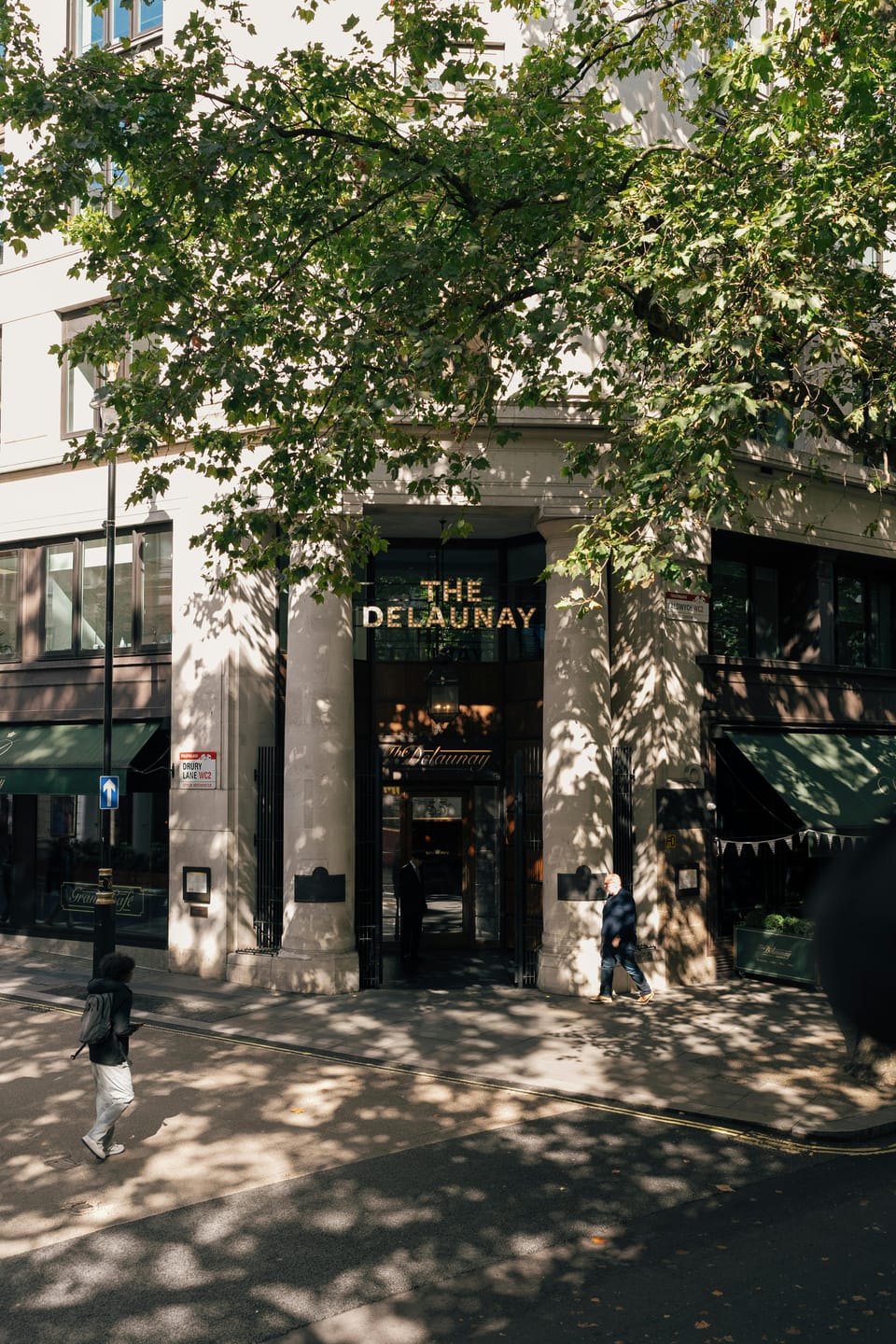
London has just wrapped up the Jefferies Global Healthcare Conference 2025, now firmly established as Europe’s largest healthcare investment gathering. Over four days (November 17–20, 2025), around 4,500 participants from 50 countries and 950 companies converged on the city.
Often dubbed the “J.P. Morgan of Europe,” this once-boutique meeting has ballooned into a must-attend fixture on the biotech calendar. It’s grown so big that organizers expanded beyond the historic Waldorf Hotel to multiple venues around the West End to accommodate the overflow. The result was a dense concentration of healthcare CEOs, CFOs, investors, and advisors packed into a few central London blocks – and an atmosphere crackling with excitement.
“Jefferies Week” Takes Over London’s Life Sciences Scene
Locals have taken to calling this whirlwind “Jefferies Week.” In fact, the conference anchored London Life Sciences Week 2025, a city-wide festival of networking and deal-making running November 16–21. By the numbers, there were 70+ affiliated events throughout the week, drawing over 1,300 life science investors and 2,400 biotech companies to town.
The week officially kicked off with a welcome reception at Somerset House and then rolled out a series of satellite sessions showcasing the UK’s thriving biotech ecosystem.
Every evening, industry players fanned out to invitation-only mixers hosted by banks, law firms, and VCs. By day, overflow from Jefferies presentations spilled into nearby cafés and pubs. As one journalist quipped, Covent Garden’s normally tourist-filled coffee shops were “swamped by smart suits” and filled with chatter about gene therapies. In other words, everyone was in London this week.
One attendee noted, “It’s not just about the conference, it’s about the eco-structure that comes with it” – if you worked in biotech or pharma, you simply had to be there.
Even service providers like CROs got in on the action; Pharmidex, for example, braced for “a busy week discussing all things life-science related” across the various events. The atmosphere was energetic and convivial – a mix of high finance and reunion, with dealmakers bouncing between panel sessions and pints at the pub.
Resilience, Optimism and Deal Talk Everywhere
Despite a challenging macro backdrop in 2025, the prevailing tone at Jefferies was one of guarded optimism. Jefferies’ own analysts reported that the healthcare sector “continues to be strong and adaptable despite the challenges” of high interest rates and geopolitical uncertainty. Industry leaders have adjusted to tighter conditions, and this resilience was on full display in London.
In fact, many management teams struck a “distinctly more upbeat tone” compared to just a few months prior. With greater clarity in U.S. policy post-election and a sense that the worst of inflation is behind us, confidence quietly crept back into conversations. Pharma executives spoke of an improved operating environment and even renewed momentum in biotech M&A.
As one report noted, sentiment had “shifted decisively from uncertainty to confidence” among companies and investors alike. CEOs openly discussed the need for bolt-on acquisitions, fueling speculation that more deals are brewing in the coming months.
Concrete examples underscored this upbeat outlook. “Significant growth” opportunities were highlighted by firms like Siemens Healthineers – whose CFO discussed a new 4D ultrasound partnership expected to boost their cardiology business.
Roche, for its part, voiced strong confidence in a recently announced breast cancer trial (giredestrant), predicting it will become a “backbone” therapy in early breast cancer – a “win-win for both the industry and patients,” as one executive put it. Such optimism from top pharma companies was notable given that 2025 began with many big players in wait-and-see mode.
The biotech sector’s mood was equally upbeat: dozens of emerging biotechs at Jefferies are on the cusp of major drug launches in the next 6–12 months, and they projected confidence in their ability to execute.
Notably, areas like cardiovascular disease and ophthalmology – long overshadowed by oncology – have multiple therapies nearing market. Attendees pointed out that these historically underfunded fields could see a surge of investor interest as new products roll out.
Even medtech device makers had bright spots to discuss: while some device markets remain sluggish, companies reported early signs of recovery and highlighted innovation (AI-driven diagnostics, bionic implants) to drive future growth. All in all, the narrative was that healthcare has weathered the storm and is ready to grow again.
Hot Topics: GLP-1s, AI, New Therapies and Services
Amid this cautious optimism, certain buzzwords kept popping up in conversations. One was GLP-1 agonists – the hot new class of weight-loss and diabetes drugs (think Ozempic and its peers). The astonishing commercial success of these therapies has captured investors’ imaginations, and many were eager to discuss who might have the next big GLP-1 contender.
Likewise, AI in life sciences was a favorite topic, from how drug discovery startups are using artificial intelligence to design molecules, to how big pharma is leveraging AI for diagnostics and patient data.
As Jefferies’ own pre-conference insights noted, innovations in AI and GLP-1s are continuing to excite investors going into 2025.
Another talking point was the evolution of cell and gene therapy – once ultra-futuristic, these technologies are now delivering real-world products. Attendees swapped notes on promising gene therapy trial results and next-generation cell therapies (like off-the-shelf CAR-T cells) that could broaden cancer treatment.
And let’s not forget the healthcare services and CRO/CDMO players.
The backbone of the industry, companies in clinical research and drug manufacturing services, also had a strong presence. Many see these service providers as steady partners enabling all the science, and indeed their calendars were packed with clients old and new.
In short, from cutting-edge science to the nuts-and-bolts of getting drugs developed, Jefferies Week buzzed with a mix of excitement and pragmatism on every front.
Global Flair and International Participation
Another striking element of Jefferies Week was its global scope. This year saw a notably strong Asian contingent, underlining Asia’s rising role in biotech innovation. Investors pointed out that China’s biopharma pipeline is becoming globally competitive, Japan’s steady growth in pharma continues, and India is quickly moving up the value chain in drug development.
This international presence added to the sense that, for one week at least, London became the center of the healthcare finance world. As one veteran attendee joked, everyone wants to announce a deal at J.P. Morgan in January – but “maybe soon they’ll want to announce one before Jefferies in November”. That half-serious remark speaks to the conference’s growing clout.
Major news tends to drop around San Francisco’s JPM week each January, but with London’s event now so prominent, late November might spawn its own wave of press releases in years to come.
The fact that executives and investors flew in from across Europe, North America, and Asia created a cosmopolitan buzz – you were as likely to hear French, Mandarin or Hindi in the meeting halls as English. If Jefferies London was once considered a regional stop, it’s now truly a global hub for healthcare deal-making.
Capital for Cures: A Royalty Financing Spotlight
Amid the main conference buzz, our very own side event during Jefferies Week zeroed in on financing innovation.
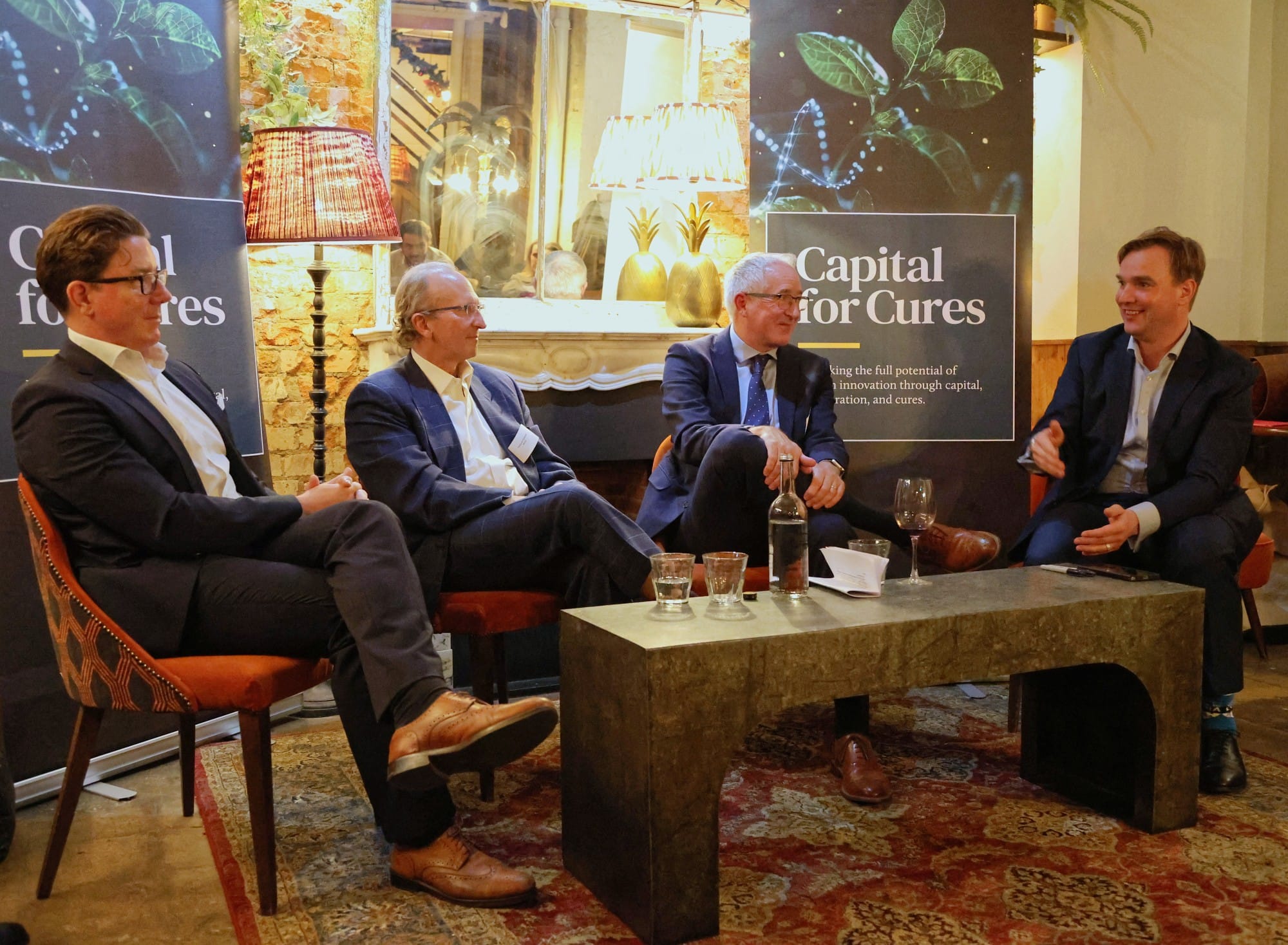
On the evening of November 19, the invitation-only forum titled “Capital for Cures: Royalty Financing” drew a select crowd to Marylebone. Organized by Sebastian Gensior (founder of Capital for Cures), this event highlighted an emerging trend in biotech funding. The panel – featuring Tony Hickson (Cancer Research Horizons), Bodo Marrr (former MorphoSys), and Richard G. Gervase Jr. (life sciences attorney at Mintz) – explored how royalty and revenue-based financing is becoming “one of the most dynamic sources of capital” for life sciences as traditional venture funding tightens.
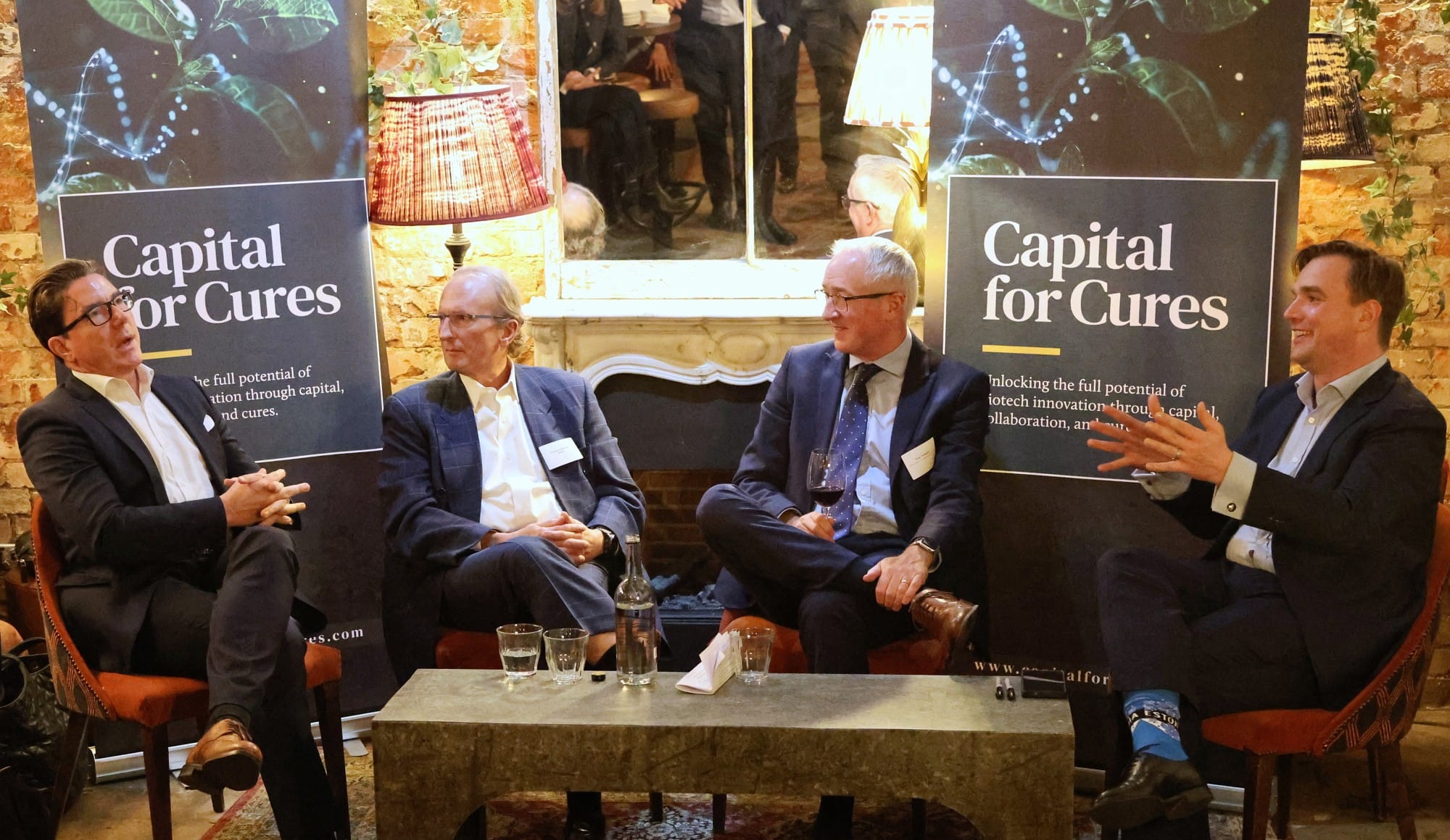
In essence, investors are increasingly willing to provide upfront cash in exchange for a share of future drug revenues – a creative, non-dilutive way to bridge science and finance at a time when IPOs and VC rounds are harder to come by. The mix of perspectives (a nonprofit investment arm, a healthcare private equity investor, and a deal lawyer) made for a rich discussion on funding breakthroughs while preserving long-term value.
The royalty financing conversation resonated strongly with the week’s broader theme of financial creativity. The audience – a who’s who of family offices, venture investors, and biotech entrepreneurs – was eager to dive into the details over post-panel drinks. In the networking session that followed, small groups debated case studies of recent royalty deals and swapped business cards, extending the Jefferies Week deal flow late into the night.
Attendees and even commentators on social media highlighted the buzz around #royaltyfinancing, noting that the event tapped into a key theme of finding “smarter capital” for biotech.
By integrating this forum into the week’s activities, Jefferies Week shone a light not just on new medicines, but on new ways to fund those medicines – with investors and scientists collaborating on innovative financing models to keep medical breakthroughs moving forward.
It was a pragmatic, hopeful tone: in today’s market you have to get creative to fund innovation, and this crowd was clearly up for the challenge.
A Transformative Week – and a Sign of What’s to Come
As Jefferies Week wrapped up, the feeling in London was overwhelmingly positive. Deals were not only discussed – many felt that future partnerships were seeded in the countless meetings and serendipitous encounters over those four days. London successfully positioned itself as a global hub of healthcare finance (at least for this mid-November week), with a vibe equal parts high-powered and collegial.
The general mood mixed optimism with realism: yes, challenges like high interest rates persist, but the consensus was that healthcare remains a “strong and adaptable” sector, and that savvy capital will always find a way to chase promising science.
From the bustling halls of the Waldorf to the packed networking receptions around Covent Garden, a clear message emerged: the industry is pushing forward, armed with fresh ideas – be it new therapies, new markets in Asia, or new financial instruments to fund it all. If this trajectory continues, the Jefferies London conference may soon rival its U.S. counterpart not just in size, but in its ability to drive the conversation and capital flows in healthcare.
As one observer wondered aloud, perhaps “everyone will want to announce a deal just before [Jefferies]” in the future. That quip, half in jest, captures the ambitious spirit that defined Jefferies Week 2025 – a spirit likely to carry into the coming year as the life sciences industry charts its next phase of growth.
What does this week signal for the future? For one, it shows that investor confidence in biotech is coming back, backed by real product progress and creative financing to match. It also underlines the increasingly global nature of biotech innovation – capital and ideas flowing from all corners of the world into a common arena.
Perhaps most importantly, Jefferies Week 2025 signaled that the zeitgeist is shifting from caution to action. After a tough period, companies and investors are ready to roll up their sleeves again. Whether it’s through traditional partnerships or novel royalty deals, the focus is firmly on translating breakthroughs into business success. And if the buzz in London is any indication, 2026 could see a fresh wave of biotech innovation and investment – with Jefferies and its community leading the charge.
Member discussion