China's clinical trial paradox: massive volume growth masks declining quality and FDA skepticism
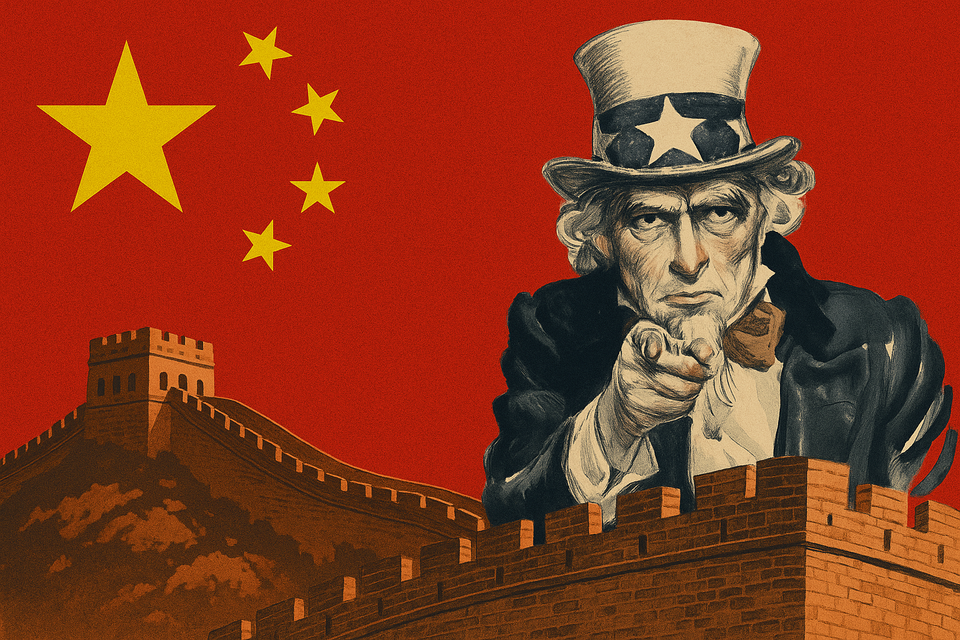
Despite a 73% collapse in venture funding from $15.7B (2021) to $4.2B (2024), China's clinical trial registrations reached unprecedented levels in 2024-2025. The country logged 4,900 clinical trials in 2024—a 13.9% increase year-over-year—and by mid-2025 had nominally surpassed the United States in annual trial initiations: approximately 7,100 trials versus 6,000.
But the headline numbers conceal a troubling quality collapse. Phase I-to-Phase II success rates have crashed from 34% to 20% as volume surged—meaning 80% of China's early-stage programs now fail to advance despite lower advancement bars. Chinese pivotal trials rely on 58% single-arm designs without control groups versus 37% in the US, average just seven endpoint measurements versus over ten in US trials, and under 30% include international sites compared to 80% of American Phase III programs. Some conditional approvals have been granted for drugs with response rates below 20%—well beneath the 24% threshold where 81% of FDA accelerated approvals were later revoked.
The FDA's response has been unambiguous. The agency has rejected multiple high-profile China-developed drugs including Hutchmed's surufatinib and Eli Lilly/Innovent's sintilimab, explicitly citing concerns over single-country trial data. At least 25 oncology drug applications from China face heightened scrutiny. In June 2025, the FDA halted all new clinical trials exporting American genetic data to China and declared it would "not approve any more gene therapies" where American patients' cells are sent to China for editing—a direct rebuke to China's cell therapy infrastructure.
This paradox, featured in The Economist's November 2025 analysis, reveals an industrial-scale experiment in whether regulatory speed and development cost advantages can substitute for methodological rigor. Five years of data increasingly suggest the answer is no—at least not for drugs intended for Western markets.
Why counting "7,100 trials" is fundamentally misleading
The claim that China now conducts more clinical trials than the United States requires immediate and substantial qualification. Not all trials generate equal scientific value or commercial utility, and China's portfolio is overwhelmingly weighted toward the least informative category: small, single-site, early-stage safety studies that produce minimal data applicable to global drug development.
The phase composition tells the real story. China's 42-47% Phase I concentration means roughly 3,000 of those 7,100 trials are dose-finding safety studies—typically involving 20-60 patients tested at a single Chinese hospital over 6-18 months. These generate basic pharmacokinetic data and establish maximum tolerated dose, but reveal almost nothing about efficacy, durability of response, or how drugs perform in diverse populations or against active comparators.
By contrast, the US Phase I share of 28% represents approximately 1,680 trials from a base of 6,000—but American Phase I programs typically enroll larger cohorts across multiple sites with more extensive biomarker characterization, PK/PD modeling, and often include expansion cohorts that blur into Phase II. A single US Phase I/II basket trial in oncology can enroll 200+ patients across multiple tumor types; a typical Chinese Phase I enrolls 20-40 patients in a single indication at a single site.
The quality collapse: more trials, worse outcomes
PMC analysis of 2011-2020 Phase I trials in China documents a devastating inverse relationship between volume and quality. During 2011-2015, China registered 163 new Phase I programs and 34% advanced to Phase II. During 2016-2020, registrations exploded to 761 programs—but the Phase II transition rate collapsed to just 20%.
This means that from the 2016-2020 cohort, approximately 608 Phase I programs (80%) failed to generate data compelling enough even for Phase II advancement—despite China's lower bars for progression and faster regulatory timelines. The implied burn rate is staggering: assuming $1-2M per Phase I trial, China biotechs incinerated $600M-1.2B on Phase I programs in that cohort alone that went nowhere.
The PMC study attributes this to structural factors: "The need to accelerate patient recruitment led to the selection of clinical trial centers based on their ability to enroll rather than on their experience, which might result in more inexperienced investigators and clinical trial practices being involved." In plain language: site selection prioritized speed over competence, creating systematic quality risk.
Inexperienced sites miss adverse events, fail to follow protocols rigorously, enroll inappropriate patients, and generate data Western regulators view skeptically. The 60-day "implied license" policy—which auto-approves trials without substantive review—exacerbates this by eliminating the regulatory check that would flag weak protocols before they waste time and capital.
What China's phase distribution actually reveals
| Metric | China reality | US comparison | Implication |
|---|---|---|---|
| Phase I share | ~3,000 of 7,100 (42-47%) | ~1,680 of 6,000 (28%) | Heavy weighting toward least informative studies |
| Phase I→II success | 20% (2016-2020 cohort) | Higher baseline (~30-35%) | 80% of programs generate no actionable data |
| Phase II→III success | 19% vs 28.9% global | 28.9% global benchmark | Critical execution gap in registrational design |
| Median Phase I size | 20-40 patients, single-site | 40-80+ patients, multi-site | Less comprehensive safety/PK characterization |
| Phase III multinational | <30% include foreign sites | ~80% include US/EU sites | Data not designed for global submissions |
| Pivotal trial design | 58% single-arm (no control) | 37% single-arm | Weaker evidence for efficacy |
| Phase III endpoints | ~7 measurements average | >10 measurements average | Less rigorous assessment of benefit-risk |
Consider what these numbers mean in aggregate. If China runs 7,100 trials and 42% are Phase I, that's ~3,000 Phase I programs. At a 20% Phase II transition rate, only ~600 advance. At a 19% Phase II→III rate, only ~114 reach Phase III. At a 69% Phase III success rate, approximately ~79 programs achieve NMPA approval.
But NMPA approval ≠ FDA approval. The success rate for Chinese MRCTs advancing from Phase I to FDA approval is substantially lower—analysis of 259 MRCTs found overall Phase I→FDA approval rates in the single digits for Chinese-origin assets.
So from 7,100 trials, perhaps 10-30 will ultimately achieve FDA approval over the next 5-10 years. That's a 0.14-0.42% success rate from trial initiation to US market—dramatically worse than the often-cited ~10-12% overall probability of success from Phase I in Western pharma (itself considered poor).
The FDA rejection problem: China-only data increasingly insufficient
The FDA has moved from cautious openness to explicit skepticism about China-only trial data over the past three years. High-profile rejections have sent clear signals that Chinese biotechs and their Western licensing partners ignore at their peril.
Major FDA rejections of China-developed drugs (2022-2025)
| Drug | Sponsor | Indication | Rejection reason | Trial design | Status |
|---|---|---|---|---|---|
| Surufatinib | Hutchmed | Pancreatic NETs | China-only data, population not representative | 2 Phase III China + 1 US bridge | CRL Sept 2022 |
| Sintilimab | Eli Lilly/Innovent | NSCLC | Single-country data, US population not represented | China-only Phase III | CRL 2022 |
| Toripalimab (initial) | Junshi/Coherus | Nasopharyngeal CA | Manufacturing issues (later resolved) | MRCT but no US sites | Initially rejected, later approved |
The surufatinib rejection is particularly instructive. Hutchmed conducted two Phase III trials in China enrolling hundreds of patients, plus a bridging trial in the US—and the FDA still rejected the application. In its Complete Response Letter, the FDA specified that additional trials would need to:
- Include patients "more representative" of US NET populations
- Compare surufatinib to the US standard of care (not Chinese SOC)
- Account for US treatment guidelines recommending Opdivo/Yervoy combinations after chemotherapy—a regimen not studied in Chinese trials
This last point is critical. Chinese trials typically compare experimental drugs to older chemotherapy or single-agent targeted therapy because that reflects Chinese clinical practice and reimbursement. But US oncologists often use newer combination immunotherapy upfront, meaning Chinese trial comparators are obsolete in the US context. A drug that looks good versus chemotherapy may fail against modern immuno-oncology combinations.
FDA Oncology Center Director Richard Pazdur made the agency's position explicit in public comments: approximately 25 oncology applications from China based on single-country data were under review, and the FDA's "primary concern centers on data generalizability to the U.S. population, considering both genetic differences and variations in medical practices."
The June 2025 escalation was even more dramatic. The FDA announced it would:
- Halt all new clinical trials where American patients' cells are sent to China for genetic engineering
- "Not approve any more gene therapies" where US patients' cells go to China for editing
- Immediately review ongoing trials for informed consent violations
FDA Commissioner Martin Makary stated on the agency's podcast that while "most likely there is nothing nefarious going on," the FDA wants gene editing "done in the United States or in countries friendly to the United States." This is a blanket policy rejection of Chinese cell therapy manufacturing for US trials—a massive barrier for Chinese CGT companies given that cell/gene therapy represents 42% of China's clinical trial portfolio.
The methodological quality gap: single-arm trials and weak endpoints
Beyond geographic and population representation issues, Chinese clinical trials differ systematically from Western trials in ways that undermine data quality and interpretability.
Pivotal trial design: China vs United States
Wiley analysis of oncology drugs approved 2015-2021 found stark differences:
| Trial characteristic | China | United States | Clinical implication |
|---|---|---|---|
| Single-arm design (no control group) | 58% of pivotal trials | 37% of pivotal trials | Much harder to assess true efficacy; confounded by natural disease course |
| Randomized design | ~50% | >60% | Less rigorous; selection bias possible |
| Open-label (patients/doctors know treatment) | ~80% | ~80% | Similar; both high, creates expectation bias |
| International/multi-regional | <10% of pivotal | 95% of pivotal | Chinese data not validated in diverse populations |
| Endpoint measurements | ~7 per Phase III | >10 per Phase III | Less comprehensive benefit-risk assessment |
| Patient enrollment (Phase III) | Smaller, less variable | Larger, more variable | Narrower confidence intervals in China (underpowered?) |
| Trial duration | 30mo Phase I, 40mo Phase II, 50mo Phase III | Longer across all phases | Faster completion = less long-term safety data |
The 58% single-arm rate for pivotal Chinese trials deserves special attention. Single-arm trials compare outcomes to "historical controls" or published benchmarks rather than enrolling a concurrent control group receiving standard therapy. This design is dramatically less rigorous because:
- Patient selection bias: Investigators choose patients likely to respond
- Temporal confounding: Care improves over time; historical controls reflect outdated practice
- Cross-trial heterogeneity: Different eligibility criteria, endpoints, patient populations make comparisons suspect
- Publication bias: Only successful historical trials get published; benchmarks are inflated
The FDA has documented this problem. Analysis cited in PMC research found that 81% of cancer indications revoked by the FDA under accelerated approval had been evaluated in single-arm trials, and most had response rates below 24%. Yet 4.7% of China's conditional approvals granted marketing authorization to drugs with response rates below 20%—well beneath the threshold where most FDA approvals fail.
Response rate variability in Chinese single-arm trials is enormous: 13% to 92% across conditionally approved drugs. This range suggests either dramatic differences in drug quality (unlikely given similar mechanisms) or dramatic differences in patient selection, endpoint assessment, or both.
The endpoint measurement gap matters because it indicates less comprehensive benefit-risk assessment. US Phase III oncology trials typically measure:
- Multiple efficacy endpoints (ORR, PFS, OS, DOR, TTR, etc.)
- Quality of life (EORTC QLQ, FACT-G, etc.)
- Multiple safety assessments (AEs, SAEs, treatment discontinuation, dose modifications)
- Pharmacokinetics in special populations
- Biomarker analyses for patient selection
Chinese trials average ~7 measurements—often just ORR, PFS, and basic safety. This produces cleaner datasets that look good in press releases but provide less information about real-world performance.
The international trial deficit: <10% of pivotal Chinese trials include foreign sites
Perhaps the most damning statistic: less than 10% of pivotal Chinese clinical trials include international sites, compared to 95% of US pivotal trials. This isn't a trivial difference—it means Chinese trials are explicitly not designed for global regulatory submissions.
The ICH E17 guidance on multi-regional clinical trials, which China adopted in 2019, specifically recommends including diverse regional sites to:
- Generate data applicable across regulatory jurisdictions
- Account for intrinsic factors (genetics, disease epidemiology)
- Account for extrinsic factors (medical practice, standard of care, endpoints)
- Enable simultaneous submissions to multiple agencies
By conducting <10% of pivotal trials as MRCTs, Chinese companies are choosing a China-first strategy that requires repeating or expanding trials for Western markets. This makes economic sense when:
- Chinese market size alone justifies development costs
- NMPA approval comes fast and cheap (relative to FDA/EMA)
- Chinese trials can be leveraged to attract Western licensing partners who fund global Phase III
But it creates a valley of death for Chinese biotechs targeting global markets. They burn early capital on China-only Phase I/II, achieve promising results, and then face the reality that Western pharma partners require expensive MRCTs to derisk FDA/EMA submissions. Many licensing deals implicitly shift this burden: Chinese biotech delivers proof-of-concept, Western partner funds the registrational MRCT.
This division of labor sounds efficient until you examine Phase II→III transition rates. For Chinese MRCTs (trials that DO include foreign sites), the Phase II→III success rate is 19% versus 28.9% globally. This suggests Chinese companies struggle to translate proof-of-concept data into registrational-quality global programs—possibly because:
- Targets that work in Chinese populations don't translate globally
- Single-arm Phase II results don't hold up in randomized Phase III
- Lack of experience designing trials that meet FDA/EMA expectations
- Different approaches to endpoint selection and statistical powering
Whatever the cause, a 19% Phase II→III rate means 81% of Chinese assets that reach Phase II still fail—even when the asset is good enough that a Western pharma partner committed capital to a global MRCT. This execution risk should concern anyone evaluating Chinese licensing deals.
Manufacturing quality concerns: FDA warning letters and plant restrictions
Trial design isn't the only problem. Manufacturing quality has emerged as a persistent concern, with the FDA issuing multiple warning letters and plant restrictions for Chinese contractors supporting clinical trials.
In September 2024, the FDA issued warning letters to two major Chinese contract testing laboratories for "pervasive failures" in GMP compliance. In March 2025, the FDA rejected all study data from these facilities pending corrective action. This affected dozens of ongoing trials and created a backlog of Chinese sponsors scrambling to re-test samples at FDA-cleared labs.
The broader issue is that China's clinical trial infrastructure boom ran ahead of quality systems maturation. As PMC research noted, the 60-day implied license system and site selection based on enrollment speed rather than experience created systematic quality risk. When trial sites rush to enroll without adequate GCP training, protocol deviations accumulate, consent forms get glossed over, and data quality suffers.
The 2015-2016 "Clinical Trial Data Inspection Storm" revealed the scale of the problem: 80% of 1,622 pending applications were voluntarily withdrawn when NMPA announced random inspections with severe penalties. This suggests that at peak pre-reform bubble, roughly 80% of Chinese trial applications had data quality issues serious enough that sponsors preferred withdrawal to inspection.
Post-reform data quality has improved measurably—FDA inspection pass rates for Chinese clinical sites rose from 48% (2009-2015) to 85% (2016-2023). But 85% pass rate still means 15% of inspected Chinese sites fail FDA inspection—versus 10-12% failure rates for US sites. And FDA only inspects sites for trials with pending US applications; the broader Chinese trial landscape receives no FDA scrutiny.
H1 2025 licensing bonanza: why Western pharma is buying despite quality concerns
Against this backdrop of FDA rejections, quality concerns, and low success rates, Western pharmaceutical companies committed $48.5 billion to Chinese biotech partnerships in H1 2025 alone—already exceeding the $44.8 billion total for all of 2024. This apparent contradiction demands explanation.
The economic logic of licensing Chinese assets
Western pharma faces a brutal calculus:
- Patent cliffs: $300+ billion in revenue at risk from patent expiries through 2030
- R&D productivity crisis: Only ~10-12% of Phase I programs reach approval, cycle times stretch 10-15 years
- Cost inflation: US Phase I-III development now costs $200M-500M per asset
- Depleted pipelines: Major pharma needs 5-10 new approvals annually to offset patent losses; most generate 1-3
Chinese biotechs offer a compelling value proposition:
- Proof-of-concept for $5-15M: Chinese companies can advance assets through Phase I/II for 1/10th the US cost
- 30% valuation discount: Chinese assets command 30% lower deal values than comparable Western peers
- Speed: 2-3x faster enrollment, 60-day IND approval, NMPA conditional approval pathways
- De-risked early-stage: Human PK/PD data beats preclinical every time; even China-only data reduces technical risk
The deal structure reflects this arbitrage. Typical terms:
- Small upfront ($50M-200M): Covers near-term Chinese commercialization
- Large milestones ($500M-2B): Backloaded to global approval/sales triggers
- 10-20% Chinese royalties: Western partner gets most economics outside China
- Western partner funds global Phase III: This is where the real money goes—$100M-300M for MRCT
From Big Pharma's perspective, this works if:
- The Phase I/II data is good enough to justify global Phase III investment
- Success rate from Chinese Phase II → FDA approval is >20% (better than starting from scratch)
- Cost savings on early development offset risk of FDA rejection
The 19% Phase II→III transition rate for Chinese MRCTs sits right at this threshold. It's terrible compared to Western-origin assets (~29%), but still better than the ~10% Phase I→approval baseline. And the early-stage cost savings are real—$5M-15M to Phase II in China versus $50M-100M in the US.
Recent mega-deals examined critically
| Deal | Upfront | Total value | Phase at deal | Critical assessment |
|---|---|---|---|---|
| Pfizer/3SBio (PD-1/VEGF bispecific) | $1.25B | $6.15B | Phase III-ready | Largest Chinese upfront ever; asset de-risked with Chinese Phase II data showing superiority to current SOC. Risk: Comparator may not reflect US practice. |
| GSK/Hengrui (~12 programs) | $500M | $12B+ | Portfolio deal, mixed phases | Platform deal betting on Hengrui's pipeline depth. Risk: Most assets early-stage; 80% will fail based on Chinese Phase I→II rates. |
| Takeda/Innovent (2 mAbs) | $1.2B | $11.2B | Oncology mAbs | Takeda doubling down on Chinese assets post previous Innovent deals. Track record matters. |
The Pfizer/3SBio deal is revealing. $1.25B upfront is extraordinary for a Chinese asset—it's the largest upfront payment ever for a China-origin drug. This reflects:
- Phase III-ready status (de-risked)
- Bispecific antibody (hot modality)
- PD-1/VEGF combo (validated mechanism in Chinese trials)
- Pfizer's desperate need for late-stage oncology assets
But look at the fine print: the deal gives Pfizer rights "if approved." Pfizer still needs to run global Phase III trials including US sites, submit the BLA, and get FDA approval. The $1.25B upfront likely covers:
- Exclusive negotiating position before competitors bid
- Rights to Chinese manufacturing data/IP
- Option to acquire at fixed price if Phase III succeeds
- Some near-term milestone payments
The $4.8B in additional milestones don't get paid unless the drug navigates FDA approval, launches commercially in major markets, and hits sales thresholds. Given the 19% Phase II→III transition rate and the FDA's documented skepticism about China-only data, Pfizer's risk of receiving zero value beyond the Chinese market remains substantial.
The "NewCo" structure: regulatory arbitrage or necessity?
The dominant deal structure for Chinese out-licensing has evolved toward the "NewCo" model: Chinese biotech spins off pipeline asset to newly created Delaware corporation, US/EU VC invests equity, Chinese licensor retains 10-20% equity plus milestones/royalties, NewCo develops asset through FDA with Western management.
Pharmaceutical Technology's analysis describes this as "mitigating geopolitical concerns." Translation: Western pharma doesn't want to hand $500M to a Chinese company and hope for the best. The NewCo structure provides:
- US-domiciled entity for regulatory/contracting purposes
- Western management familiar with FDA expectations
- Separation from Chinese parent if geopolitical issues arise
- Cleaner IP structure for US/EU prosecution
But it also reveals the fundamental problem: Western pharma doesn't trust Chinese biotechs to execute global development independently. If Chinese trials and regulatory expertise were truly world-class, direct licensing deals would dominate. Instead, Chinese biotechs accept 10-20% equity in NewCos—meaning they get diluted to minority positions in their own molecules in exchange for Western validation and capital.
This is better than the VC drought alternative (bankruptcy), but it's not the "China innovation reshaping global biopharma" narrative. It's outsourced early-stage R&D, where Chinese companies provide cheap proof-of-concept, Western partners provide global development/commercial expertise, and Chinese biotechs accept junior economic positions.
The transparency deficit: opaque data and structural reporting gaps
Chinese clinical trial transparency differs fundamentally from Western systems in ways that should concern sophisticated investors but frequently gets glossed over in bullish commentary.
Per TranspariMED analysis, "Companies running drug and vaccine trials in China are under no legal obligation to make study results public." Results go to NMPA regulators only, not public registries. While China disclosure laws technically cover broader trial categories than US FDAAA 801, the lack of public results posting makes compliance impossible to verify externally.
Contrast with ClinicalTrials.gov:
| Registry feature | ChiCTR (China) | ClinicalTrials.gov (US) | Impact |
|---|---|---|---|
| Results posting required | No | Yes (FDAAA 801) | Can't independently verify outcomes |
| Posting compliance penalties | None | Up to $10K/day fines | No enforcement mechanism |
| Adverse event reporting | To regulator only | Public within 1 year | Safety signals hidden |
| Negative results posting | Voluntary | Mandatory | Publication bias severe |
| Trial completion verification | Inferred | Explicitly reported | Status often unclear |
ChiCTR data analysis documents systematic problems: redundant entries (same trial registered multiple times under different IDs), missing records (trials referenced in papers but not in registry), and inconsistent status classifications (trials marked "recruiting" years after publications report completion).
The publication bias is severe and well-documented. JAMA Network meta-analysis found Chinese trials are significantly more likely to report positive results (odds ratio 2.96, p<0.0001) than trials from other countries. For traditional Chinese medicine trials, the publication record is "uniformly positive" with selective outcome reporting in 29-45% of registered studies—meaning investigators retroactively change primary endpoints to whatever showed statistical significance.
This opacity has practical consequences for due diligence:
- Can't verify completion rates: How many trials actually finish vs get quietly abandoned?
- Can't assess safety profiles: Adverse events only surface in publications, not registries
- Can't identify negative results: Failures disappear; only successes get published
- Can't benchmark against peers: With selective reporting, comparative effectiveness unknown
When Western pharma conducts due diligence on Chinese assets, they rely heavily on sponsor-provided data packages and NMPA review documents rather than public registries—creating information asymmetry that favors sellers. Caveat emptor.
Success rates expose the execution gap
While China excels at initiating trials quickly and cheaply, success rate data reveals critical execution gaps that persist despite regulatory reforms and infrastructure investment.
Phase transition success rates: Chinese MRCTs vs global benchmarks
The Lancet analysis of 259 Chinese multi-regional clinical trials provides the most comprehensive success rate data available:
| Transition | Chinese MRCTs | Global benchmark | Gap | Assessment |
|---|---|---|---|---|
| Phase I → Phase II | 61.5% | ~52% | +9.5pp | ✓ Above average (fast/cheap Phase I reduces bar) |
| Phase II → Phase III | 19.0% | 28.9% | -9.9pp | ✗ Significantly below (critical bottleneck) |
| Phase III → NDA/BLA | 69.2% | 57.8% | +11.4pp | ✓ Above average (easier NMPA standards) |
| NDA/BLA → NMPA Approval | 100% | N/A | N/A | Very high (small sample) |
| Overall Phase I → NMPA Approval | 8.1% | ~7.9% | +0.2pp | Comparable overall despite Phase II gap |
The 19% Phase II→III transition rate is the critical finding. This is 34% below the global 28.9% benchmark—a massive execution gap that suggests Chinese biotechs systematically struggle to translate early clinical signals into registrational-quality programs.
Possible explanations:
- Weaker target selection: Fast-follower strategies mean many Chinese assets chase validated-but-crowded mechanisms; differentiation difficult
- Phase II design deficits: Single-arm Phase II results don't predict randomized Phase III outcomes; Chinese companies lack experience designing pivotal trials that meet FDA/EMA expectations
- Statistical powering issues: Smaller Phase II trials optimized for speed may miss efficacy signals that only emerge in larger cohorts
- Endpoint misalignment: Surrogate endpoints that work for NMPA (ORR) don't satisfy FDA (OS, PFS); companies optimize for wrong regulator
Whatever the cause, 19% means 81% of assets that reach Phase II still fail—even when those assets are good enough that Western pharma partners committed capital to MRCTs. This execution risk should be priced into licensing deal valuations but often isn't.
The high Phase III→NDA success rate (69.2% vs 57.8% globally) might seem positive, but likely reflects NMPA's more permissive approval standards rather than superior trial execution. NMPA accepts single-arm Phase III trials, surrogate endpoints like ORR, and conditionally approves drugs that the FDA would require additional confirmatory studies.
FDA approval rates for Chinese-developed drugs remain lower than NMPA rates, though exact numbers are hard to establish given the small denominator (only ~10 Chinese-origin drugs have achieved FDA approval as of late 2025). Of the 25+ oncology applications under FDA review with China-only data, zero have been approved based solely on Chinese trial data without additional US/global trials—a 0% approval rate that speaks volumes.
The 42-47% Phase I concentration: quantity over quality
Returning to the central thesis: China's "7,100 trials" headline is misleading because composition matters as much as volume. With 42-47% Phase I weighting, China is running roughly:
- ~3,000 Phase I trials: Basic safety/dose-finding; 20-40 patients; $1-2M each; minimal commercial value
- ~1,500 Phase II trials: Proof-of-concept; 50-150 patients; $2-7M each; some commercial value if positive
- ~1,100 Phase III trials: Registrational; 150-500+ patients; $5-20M each; high commercial value if successful
- ~1,500 Phase IV trials: Post-marketing; variable size; often low-quality
Compare to the US with 28% Phase I weighting from 6,000 trials:
- ~1,680 Phase I: But larger (40-80+ patients), multi-site, often with expansion cohorts
- ~2,100-2,760 Phase II: Larger, more rigorous designs
- ~900-1,320 Phase III: But 80% multinational; much larger enrollment; gold-standard designs
- ~1,080 Phase IV: Similar
The value gap is enormous. A typical Chinese Phase I oncology trial costs $1-2M, enrolls 20-40 patients at a single site, runs 12-24 months, and generates basic PK/safety data. A typical US Phase I oncology trial costs $2-6M, enrolls 40-80+ patients across 5-10 sites, includes expansion cohorts in 2-3 tumor types, runs 18-36 months, and generates PK/PD, biomarker, preliminary efficacy, and dose-expansion data that feeds directly into Phase II design.
One US Phase I trial generates more commercially actionable data than three Chinese Phase I trials—yet all four count as "four trials" in the WHO registry. This is why crude trial counts are meaningless for assessing actual R&D productivity.
The implied Phase I failure rate: 80% go nowhere
From the PMC analysis: during 2016-2020, China registered 761 Phase I programs and only 20% advanced to Phase II. This means:
- ~608 Phase I programs (80%) failed to generate data compelling enough for Phase II
- At $1-2M per trial, that's $600M-1.2B incinerated on dead-end programs
- This doesn't include preclinical costs (typically 2-3x Phase I spend)
- Total waste from the 2016-2020 cohort: likely $2-4B on programs that went nowhere
The 20% Phase I→II success rate is 40% worse than the 34% rate from 2011-2015 (when volume was much lower). This inverse relationship between volume and quality strongly suggests China's trial boom reflects lowered barriers to entry rather than improved drug discovery.
The 60-day implied license policy eliminated meaningful regulatory review of Phase I protocols. Inexperienced sponsors with weak targets and poor trial designs get approved automatically. Sites get selected for enrollment speed rather than GCP expertise. The result: a firehose of low-quality Phase I trials that burn capital without advancing medical science.
Therapeutic area concentration: oncology dominates, but innovation is incremental
China's trial portfolio shows extreme therapeutic concentration. Oncology represents 39% of all innovative drug trials, with biologics even more weighted—50.1% of biologic trials target cancer.
Chinese trial distribution by therapeutic area (2024)
| Area | Share | Growth | Innovation assessment |
|---|---|---|---|
| Oncology | 39.0% | Stable | Mostly me-too PD-1s, ADCs, bispecifics; 86% target known mechanisms |
| Metabolic | ~9% | Surging | 60-70 GLP-1 programs (massive overcrowding); differentiation unclear |
| CNS | ~9% | +14.7% | Minimal; Chinese companies lag in CNS drug discovery |
| Infectious disease | ~9% | Declining | Post-COVID collapse; limited innovation pipeline |
| Cardiovascular | ~6% | +15.6% | Growing but small; few breakthrough mechanisms |
| Autoimmune | Growing | +14.6% | CAR-T for lupus represents genuine innovation |
The oncology concentration makes business sense—cancer is China's #2 cause of death, NMPA prioritizes oncology for expedited review, and oncology drugs command premium valuations in licensing deals. But the therapeutic focus obscures an uncomfortable truth: 86% of approved Chinese innovative drugs target mechanisms first validated elsewhere.
Of the 90 FDA-approved oncology drugs from 2015-2021, 32% were first-in-class. Of Chinese NMPA approvals in the same period: 0% were first-in-class. Every single Chinese innovative drug targeted a mechanism discovered and validated by Western companies.
The me-too/me-better strategy has merit—Chinese companies develop faster, cheaper versions of proven mechanisms, then compete on price and regional access. But "me-too" drugs face inherent limitations:
- Crowding risk: When 40+ companies develop PD-1 antibodies, differentiation becomes impossible; pricing power erodes
- IP vulnerability: First-mover companies have composition-of-matter patents; followers face complex freedom-to-operate landscapes
- Clinical trial design handicaps: Me-too drugs must show non-inferiority or superiority to incumbent; requires larger, more expensive trials
- Regulatory skepticism: FDA/EMA ask "why do we need another PD-1?" without differentiation (better efficacy, safety, delivery), approval is harder
The GLP-1 obesity space illustrates the problem. 60-70 late-stage Chinese GLP-1 programs are in development—chasing Novo Nordisk's semaglutide and Lilly's tirzepatide. Some show impressive weight loss:
- Ecnoglutide (Sciwind): 15% weight loss
- Mazdutide (Innovent): 20.1% weight loss
- HRS9531 (Hengrui): 18% weight loss
But with 60-70 entrants, how many can succeed commercially? The Chinese market can probably support 3-5 GLP-1s (market leaders plus cost-competitive alternatives). The Western market is already captured by Novo/Lilly with Amgen, Roche, and Pfizer entering. Where do Chinese GLP-1s #10-70 go? Most will be abandoned or pivot to differentiated indications (NASH, cardiovascular), but that requires new trials and most companies lack capital after burning early funds on overcrowded space.
ADCs show similar concentration risk. China has 63% of new ADCs targeting just the top 10 targets, versus 48% globally. This means less innovation diversity—dozens of companies developing ADCs against HER2, TROP2, and other validated targets, but few pursuing novel conjugation chemistry, linkers, or payloads that could create real IP differentiation.
Geographic concentration and site quality concerns
China's trials concentrate heavily in Shanghai-Beijing-Guangdong corridor. According to Frontiers analysis:
| Region | Share | Concentration risk |
|---|---|---|
| Shanghai | 18% | Extreme concentration; top hospitals oversubscribed |
| Beijing | 16% | 31% of ALL Phase I trials; site fatigue possible |
| Guangdong | 11% | Pearl River Delta manufacturing focus |
| Sichuan | 8% | West China Hospital dominates region |
| Jiangsu | 7% | Hengrui/Fosun corridor |
| Top 5 total | 60% | Extreme geographic concentration |
Shanghai + Beijing = 34% of all Chinese trials. This extreme concentration creates:
- Site fatigue: Top hospitals run 50-100+ concurrent trials; principal investigators spread thin; quality suffers
- Patient overlap: Same patient populations screened for multiple trials; selection bias; crossover contamination
- Regulatory bottleneck: Ethics committees at top sites overwhelmed; review quality declines
- Infrastructure strain: Hospital resources (imaging, labs, coordinators) over-utilized
The PMC study noted that rapid expansion led to "selection of clinical trial centers based on their ability to enroll rather than on their experience, which might result in more inexperienced investigators and clinical trial practices being involved." This is regulatory-speak for: sites were chosen because they could recruit bodies fast, not because they could execute high-quality trials.
Inexperienced sites create systematic problems:
- Protocol deviations: Failure to follow inclusion/exclusion criteria; incorrect dosing; missed visits
- Consent issues: Rushed or inadequate informed consent; patients don't understand experimental nature
- Data quality: Missing data, inconsistent measurements, poor source documentation
- Safety reporting: Adverse events under-reported or mis-classified; serious events not captured
- GCP violations: Inadequate training, inspection readiness issues, regulatory violations
The 2015-2016 Inspection Storm revealed that 80% of applications had data quality issues serious enough to warrant voluntary withdrawal. Post-reform improvements are real (FDA inspection pass rates up to 85%), but 15% failure rate means a substantial minority of Chinese sites still can't meet international GCP standards.
The timing lag and pipeline depth risk: 2026-2028 reckoning
A critical nuance frequently missed: current clinical trials reflect funding raised 3-10 years earlier. The licensing deals announced in 2024-2025 involve assets that entered Phase I during the 2017-2021 VC boom. The 7,100 trials running in 2024 were funded between 2017-2022.
With 2022-2024 funding at just 28% of 2021 peak levels ($4.2B vs $15.7B), dramatically fewer assets are entering early development now. This creates a timing lag risk that will manifest as diminished pipeline depth in 2026-2028.
The funding-to-trial delay timeline
| Asset stage | Funding vintage | Typical timeline | Current cohort size | Risk manifestation |
|---|---|---|---|---|
| Phase I (2024) | 2020-2022 funding | 2-3 years to IND | Large (3,000 trials) | Boom-era cohort |
| Phase II (2024) | 2018-2021 funding | 3-5 years to Phase II | Medium (1,500 trials) | Peak VC era |
| Phase III (2024) | 2015-2020 funding | 5-8 years to Phase III | Smaller (1,100 trials) | Pre-peak cohort |
| Phase I (2026-2028) | 2022-2024 funding | Will enter Phase I 2026-2028 | Dramatically smaller | ← Drought manifests here |
| Phase II (2027-2029) | 2022-2024 funding | Will reach Phase II 2027-2029 | Dramatically smaller | Critical licensing pipeline gap |
| Phase III (2029-2031) | 2022-2024 funding | Will reach Phase III 2029-2031 | Dramatically smaller | Late-stage asset drought |
The VC drought's delayed effects will become visible in:
- 2026: Phase I trial registrations decline 40-50% as 2022-2024 cohort enters clinic
- 2027: Phase II trial starts decline sharply; licensable asset pipeline thins
- 2028: Licensing deal volume and values decline as available assets shrink
- 2029-2030: Chinese NMPA approvals decline; late-stage pipeline gap evident
This creates an asymmetry for Western pharma doing licensing deals: the 2024-2025 bonanza represents peak vintage—assets funded during 2018-2021 when Chinese VC deployed $40B+ into biotech. The 2026-2028 vintage will be dramatically smaller, creating a licensing gap that Western pharma will need to fill from other sources.
Government support has partially offset the VC drought:
- Shanghai pledged $4B in clinical trial subsidies (August 2024)
- Hong Kong IPO market recovered: $2.3B in biotech proceeds H1 2025, up 300% YoY
- State-backed funds increasingly dominate Chinese biotech investment
But state capital has different risk tolerance and return requirements than private VC. Government funds prioritize national champions, strategic technologies, and employment over financial returns. This likely shifts portfolio composition toward:
- Platform technologies (AI, synthetic biology) over drug development
- Domestic market focus over global ambitions
- Established companies over startups
- "Safe" sectors (oncology, metabolic) over high-risk innovation
The net effect: China's biotech pipeline in 2027-2029 will be smaller, less diverse, and more concentrated in government-favored areas. Western pharma licensing teams should adjust expectations accordingly.
H1 2025 licensing deals: the data behind the hype
The $48.5B in H1 2025 licensing deals represents genuine growth—but deal structure and payment terms reveal that Western pharma is hedging risk, not making bold bets.
Licensing deal structure: backloaded milestones dominate
IQVIA analysis notes that "dealmakers have been trending toward heavily backloaded deals" where upfront payments are modest and most value comes from:
- Development milestones: Paid on Phase III start, completion, BLA submission
- Regulatory milestones: Paid on FDA/EMA approval (often 30-50% of total value)
- Commercial milestones: Paid on sales thresholds ($500M, $1B, $2B revenue)
- Royalties: 10-20% on net sales
Example: The Pfizer/3SBio deal:
- Upfront: $1.25B (paid immediately)
- Equity: $100M (minority stake in 3SBio)
- Milestones: $4.8B (contingent on development/approval/sales)
- Total potential: $6.15B
But the $4.8B in milestones only gets paid if:
- Pfizer successfully completes global Phase III (~$100-200M investment, 3-5 years)
- FDA grants approval (19% success rate from Phase II for Chinese MRCTs)
- Drug achieves commercial success (requires market share capture vs established competitors)
Assuming 20% probability of FDA approval and 50% probability of meaningful commercial success conditional on approval, the expected value of those milestones is:
$4.8B × 0.20 × 0.50 = $480M expected value
Add the $1.25B upfront + $100M equity = ~$1.83B expected total deal value—not the headline $6.15B.
This risk-adjusted math applies to most deals. The Jefferies analysis found that:
- Upfront payments for Chinese assets are 60-70% lower than Western peers
- Total deal sizes are 40-50% lower than comparable global transactions
- But premium Chinese assets in hot categories (ADCs, oncology bispecifics) now command upfronts exceeding global averages
The Pfizer deal represents the premium end—most Chinese deals feature $50-200M upfronts, not $1.25B. And even the Pfizer deal reflects a 30-40% discount to what a comparable Western asset would command (a Phase III-ready oncology bispecific from a US biotech might get $1.5-2B upfront + $8-10B in milestones).
Licensing deal concentration: oncology/metabolic dominance creates risk
BioPharmaAPAC's H1 2025 analysis found that:
- Oncology: 46% of all licensing deal value in H1 2025
- Antibody-based therapies: 42% of billion-dollar deals
- ADCs: 33% of billion-dollar deals
This extreme concentration creates portfolio risk for Chinese biotech as a sector. Companies outside oncology and metabolic disease report they "struggle to find buyers" per industry executives. CNS programs, rare diseases, infectious disease, and other therapeutic areas attract minimal Western interest despite unmet medical need.
Why the concentration?
- Western pharma pipeline gaps: Patent cliffs hit oncology/metabolic hardest; these companies need replacements urgently
- Chinese clinical infrastructure: Best validated in oncology and metabolic; less experience in CNS, rare disease
- Regulatory pathway clarity: Oncology has well-established endpoints, approval pathways; CNS is messier
- Market size: Blockbuster oncology/obesity drugs justify $1B+ upfronts; rare disease doesn't
But this creates fragility. If:
- Oncology licensing demand softens (due to pipeline saturation, pricing pressure, or geopolitical restrictions)
- GLP-1 market consolidates around 3-5 winners (Novo, Lilly, Amgen, Roche, Pfizer)
- Western pharma faces recession/budget cuts and reduces licensing activity
Then Chinese biotech loses its primary monetization channel. The 60-70 GLP-1 programs and 100+ oncology assets in Phase II would have no exit, forcing companies to either:
- Pursue Chinese market only (smaller, price-sensitive, requires competing on cost)
- Pivot to other indications (expensive, time-consuming, low probability)
- Shut down (loss of all invested capital)
Diversification into CNS, autoimmune, infectious disease, rare disease would de-risk the sector—but Chinese biotechs follow the capital, and Western capital flows to oncology/metabolic because that's where their pipeline gaps are. Rational but fragile.
Regional comparisons: China leads in volume, lags in value
Comparing China's clinical trial ecosystem to the US and Europe reveals that China has achieved volume dominance in early-stage trials but continues to lag dramatically in the high-value late-stage and multinational trial categories that drive global drug approvals.
Trial quality comparison: China vs US vs Europe (2024)
| Metric | China | United States | Europe | Assessment |
|---|---|---|---|---|
| Total trials | 7,100 | 6,000 | ~4,500 | China leads in volume |
| Phase I % | 42-47% | 28% | 14-19% | China extreme early-stage focus |
| Phase III % | 15-17% | 15-22% | 28% | Europe leads in pivotal trials |
| Multinational Phase III % | <30% | ~80% | ~75% | China isolationist |
| Median enrollment (Phase III) | Lower, less variable | Higher, more variable | Highest, most variable | China potentially underpowered |
| Single-arm pivotal % | 58% | 37% | ~30% | China relies on weak designs |
| Phase II→III success | 19% | ~29% | ~29% | China critical execution gap |
| FDA inspection pass rate | 85% | ~90% | ~88% | China improving but still below |
| Results transparency | Opaque (no mandate) | Public posting required | Public posting required | China structural deficit |
The comparison shows China has built infrastructure for early-stage, proof-of-concept work—but hasn't developed (or chooses not to use) the capabilities required for gold-standard global pivotal trials. The <30% multinational rate for Phase III trials is a choice, not a limitation—Chinese companies could run MRCTs but elect not to because:
- NMPA approval sufficient for Chinese market (~15-20% of global pharma revenue)
- MRCTs much more expensive (3-5x cost of China-only Phase III)
- Can license to Western partner who funds global Phase III after China POC
This strategy works economically but reinforces China's position as early-stage outsourcer rather than end-to-end developer. Chinese companies do the cheap work (Phase I/II), take proof-of-concept risk, then hand off to Western pharma for expensive global development and commercialization.
What the data actually shows: an uncomfortable synthesis
Stripping away promotional language and focusing on hard data, China's clinical trial transformation looks more nuanced—and less impressive—than headline numbers suggest:
What's real
- Infrastructure buildout is genuine: 7,100 trials is 7,100 trials; sites exist, patients enroll, CROs coordinate
- Cost advantages are substantial: 60-70% lower trial costs vs US are real and sustained
- Speed advantages exist: 2-3x faster enrollment, 60-day IND approval create real velocity
- Some premium assets are competitive: $1.25B Pfizer upfront proves best Chinese assets can compete globally
- Cell therapy innovation is real: CAR-T for autoimmune diseases pioneered in China; genuine scientific contribution
- Government commitment is durable: Biotech remains national strategic priority; funding will continue
What's questionable
- Volume quality trade-off: 80% Phase I failure rate suggests lowered bars created volume without value
- Execution capability gaps: 19% Phase II→III rate vs 29% global indicates systematic deficiencies
- Methodological rigor concerns: 58% single-arm pivotal trials, 7 endpoints vs 10, <30% multinational = weaker evidence
- FDA acceptance declining: Zero China-only approvals, multiple rejections, genetic data ban = FDA skepticism rising
- Transparency deficits: No public results posting, severe publication bias = opaque quality assessment
- Innovation is incremental: 0% first-in-class, 86% known mechanisms = fast-follower not pioneer
- Funding model unstable: VC collapse + licensing concentration = fragile pipeline sustainability
What this means for stakeholders
For pharmaceutical investors:
- Chinese assets offer compelling early-stage cost arbitrage
- But price in 19% Phase II→III rate, 0% FDA approval rate for China-only data, and geopolitical risk
- Expect 30-50% discount to Western peer valuations is rational given execution risk
- Oncology/metabolic concentration creates sector fragility if Western demand softens
For Western pharma business development:
- Chinese POC data reduces technical risk vs preclinical; rational to in-license
- But structure deals as backloaded milestones tied to FDA approval, not upfront payments
- Assume you will fund full global Phase III; don't rely on Chinese trial data for US submission
- NewCo structures make sense to separate development from geopolitical risk
For Chinese biotechs:
- Current licensing window (2024-2026) is peak vintage; maximize monetization now
- 2027-2029 will be much harder as 2022-2024 funding drought hits Phase II pipeline
- Diversify beyond oncology/metabolic; CNS, rare disease, infectious disease underserved
- Invest in MRCT capabilities; China-only strategy increasingly dead end for global ambitions
For policy makers:
- FDA rejection of China-only data is appropriate given methodological concerns
- But blanket genetic data export ban may over-correct; nuanced approach needed
- China's trial boom creates global drug development capacity even if quality variable
- Geopolitical restrictions (BIOSECURE Act) will reshape supply chains but likely can't stop data flow
The Economist's narrative meets inconvenient data
The Economist's November 2025 piece framed China's pharmaceutical emergence as inevitable: "After America, China is the world's largest developer of new medicines and its companies ran about a third of the planet's clinical trials last year."
But examine the supporting data:
- "Third of planet's clinical trials": True by crude count; false by commercial value (60% are early Phase I/II)
- "93 approvals in 2024, 42% domestic": The 42% domestic claim is wrong—actual data shows 84.8% domestic (39/46 Class 1 innovative drugs). The Economist appears to have confused different drug categories.
- "Time to approval shrank from 501 days to 87": Cannot be verified from primary NMPA sources; likely confounds multiple different approval pathway timelines
- "Fast-follower and first-in-class treatments now make up more than 40% of pipeline": True, but 0% of approved Chinese drugs are actually first-in-class; the pipeline claim doesn't reflect approvals
The piece quotes a pharma executive: "You can pick the winners and improve the odds of approval." But the data shows 19% Phase II→III success and 0% FDA approval for China-only trials—hardly improved odds.
The Economist concludes: "For Chinese drugmakers, the real test is not only inventing novel therapies that work but breaking into new markets and passing the regulatory hurdles associated with them... By that measure, China's industry is still 'at a very early stage.'"
This conclusion is correct, but undermines the rest of the article. If China is "still at a very early stage" in achieving FDA/EMA approval—which is the actual test of whether a drug works globally—then the headline "Chinese pharma is on the cusp of going global" is premature by perhaps a decade.
Conclusion: transformation is real but asymmetric and fragile
China has achieved a genuine transformation in clinical trial capacity and drug development infrastructure. The country evolved from negligible clinical research presence to 27-29% of global trials in under 15 years—a pace that reflects enormous government investment, regulatory reform, and entrepreneurial energy.
But the transformation is asymmetric:
- Strong in early-stage, proof-of-concept work (Phase I/II, fast/cheap)
- Weak in late-stage, registrational programs (Phase III, global, rigorous)
- Strong in specific modalities (CAR-T, ADCs, bispecifics)
- Weak in others (small molecules, CNS, rare disease)
- Strong in Chinese market access (NMPA approval, domestic commercialization)
- Weak in Western market access (FDA/EMA approval, global acceptance)
The funding collapse → licensing boom transition reflects Chinese biotechs adapting to this asymmetry. Unable to raise VC to fund end-to-end development, they monetize early-stage capabilities by licensing to Western pharma at proof-of-concept, accepting minority economics in exchange for validation and capital.
This model works, but it positions China as pharmaceutical outsourcing hub rather than innovation leader—more like India's generics industry than America's innovative biotech cluster. Chinese biotechs provide cost-effective early development services; Western pharma retains high-value late-stage development and commercialization.
Three critical risks threaten even this model:
- Quality collapse: 80% Phase I failure rate, 19% Phase II→III rate, FDA rejection of China-only data suggest volume growth came at quality cost. If this continues, Western pharma will lose confidence.
- Pipeline drought: 2022-2024 VC collapse will manifest as dramatically smaller 2026-2028 Phase II pipeline, creating licensing gap exactly when current assets are most needed.
- Geopolitical restrictions: BIOSECURE Act, FDA genetic data ban, manufacturing restrictions could fragment the China-West partnership model regardless of underlying science.
For sophisticated observers, the balanced assessment is:
- China has built genuine clinical trial capacity that adds global drug development infrastructure
- Cost and speed advantages are real and likely durable
- Some Chinese assets (premium ADCs, bispecifics, CAR-T) approach or exceed Western quality
- But 80-90% of Chinese trial volume generates limited globally-applicable data
- Methodological quality concerns (single-arm designs, weak endpoints, no international sites) are serious
- FDA acceptance is declining, not rising, as China-only data proliferates
- The licensing boom represents peak vintage (2018-2021 funded assets); future vintages will be smaller
- China's role as early-stage outsourcer may be sustainable; role as full-stack innovator remains unproven
The next 3-5 years will determine whether China's trial boom represents a sustainable restructuring of global pharmaceutical R&D or a regulatory arbitrage bubble that deflates as Western regulators tighten standards and geopolitical tensions disrupt partnerships. Current data suggests the latter is at least as likely as the former.
Disclaimer: The author is not a financial adviser or legal professional, and this content does not constitute investment advice or legal counsel. Analysis is based on publicly available data, regulatory filings, and peer-reviewed research. Clinical trial and deal data accuracy depends on source reporting quality. Readers should conduct independent due diligence and consult qualified professionals before making investment, business development, or policy decisions.
Member discussion