
Biopharma's public probability
On 16 July 2026 Kalshi began listing clinical-trial and FDA contracts. Every royalty, milestone and CVR already embedded a probability of success. Now a handful of those numbers trade in the open. Here is what each contract prices, who is allowed to know it, and whether any of it is hedgeable.
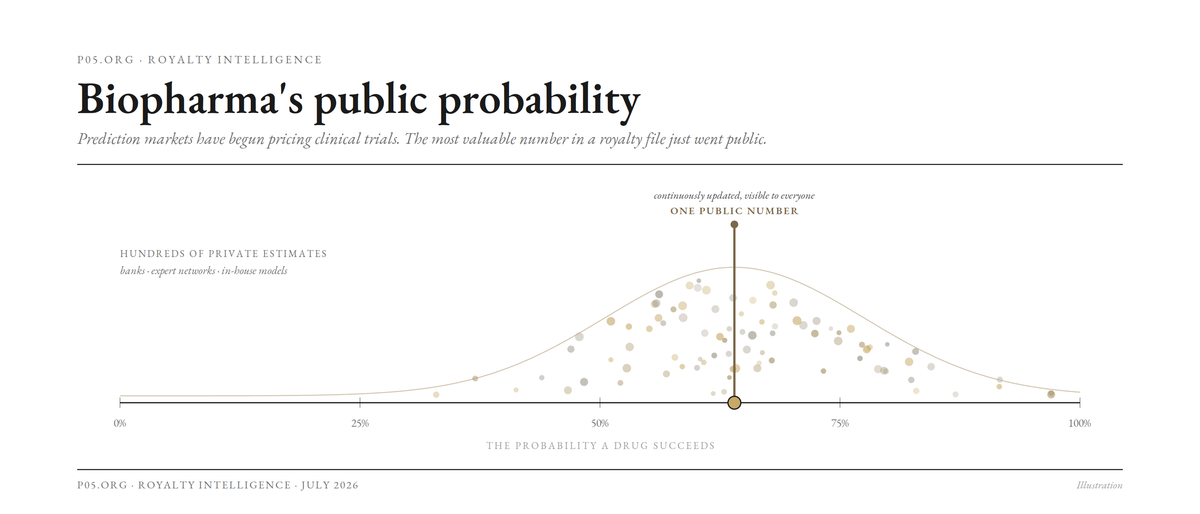
On 16 July 2026 Kalshi began listing clinical-trial and FDA contracts. Every royalty, milestone and CVR already embedded a probability of success. Now a handful of those numbers trade in the open. Here is what each contract prices, who is allowed to know it, and whether any of it is hedgeable.
Thirteen biotech contracts went live overnight, in partnership with the intelligence firm AppliedXL. By mid-afternoon on day one the "medicine" category had turned over $128,401.
The general press covered it as sports-style betting reaching drug development. For anyone who prices contingent pharmaceutical cash flows, that framing misses the point.
The probability of success has always been the most valuable number in a royalty file, and the one nobody could observe. A public market makes a few of those numbers observable. Each contract sits on top of an asset with a documented financing history.
This piece works through the contracts one by one, then through what a printed probability changes for pricing, hedging and origination, and finally through the insider-trading architecture, which is not the one most people assume.
None of this is new in spirit. Eli Lilly ran an internal prediction market to forecast its own pipeline in the early 2000s, an effort that later span out as InnoCentive. What is new is that the number is now public, priced by outside capital, and attached to named assets you may already hold paper against.
How a contract resolves
The pilot is deliberately narrow. Two archetypes, and the distinction drives everything below.
- Approval-decision contracts ask whether the FDA will approve a named drug by a stated date. They resolve on the agency's action document.
- Trial-endpoint contracts ask whether a named Phase 3 trial will meet its registered primary endpoint. They resolve on the result posted to ClinicalTrials.gov.
Resolution is run by AppliedXL as the analysis partner, with Kalshi, a CFTC-regulated exchange, as sole and final adjudicator. AppliedXL does not settle, does not take positions, and bars its staff from trading.
The mechanic matters because clinical results rarely arrive as one clean document:
- Each contract names its resolution source, and a source hierarchy, before trading opens.
- Terms are fixed in advance for publication delays, corrections, ambiguous evidence, and outright postponement or cancellation.
- The meaning of YES and NO is set before trading and is not revised to suit whichever side a result helps.
- Prices read as probabilities: a contract at $0.72 implies roughly a 72% chance of YES.
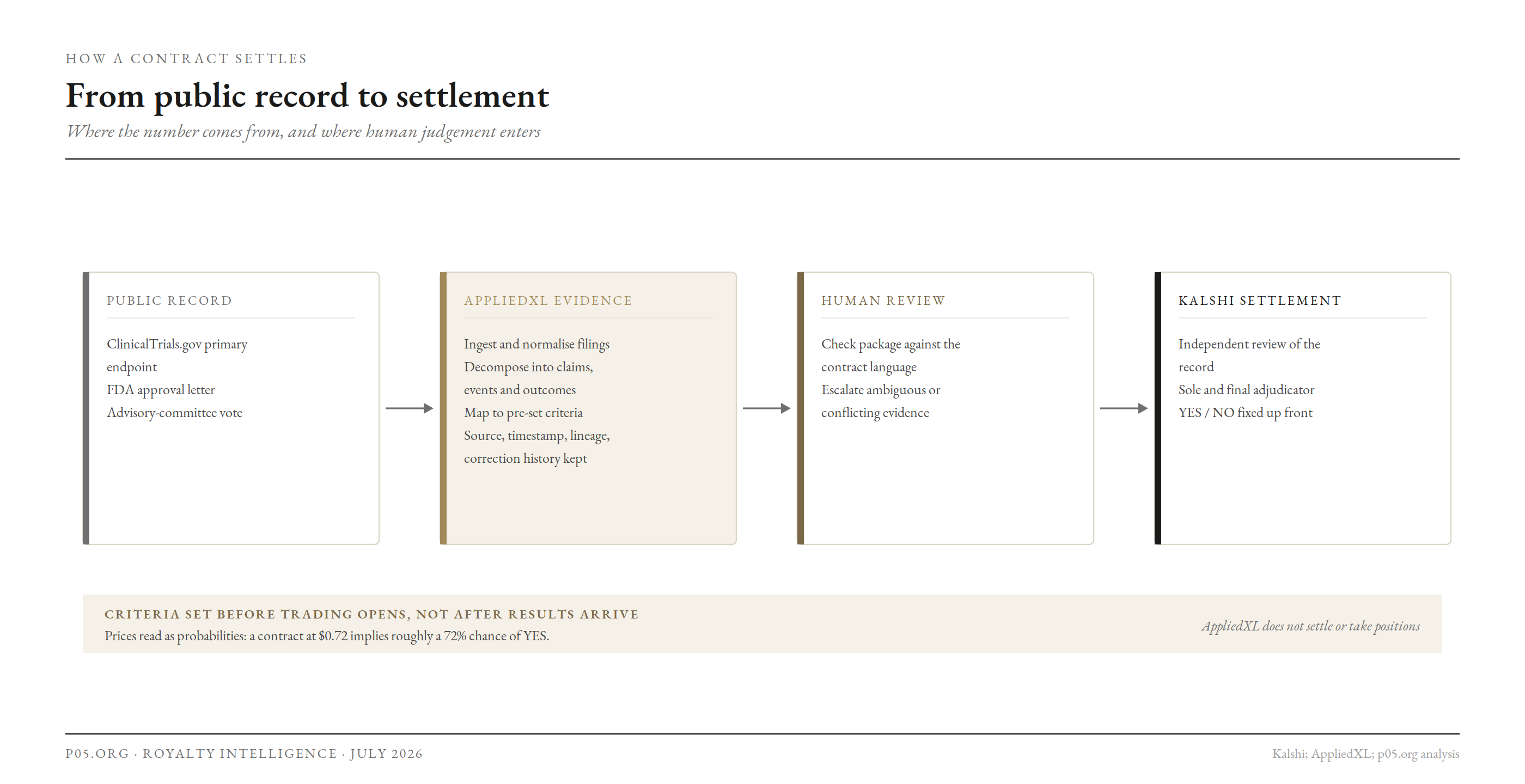
Figure 1. The resolution chain, and where human judgement enters.
The gap being targeted is real. Kalshi cites McKinsey's ~$2.3bn average cost per approved drug, and notes that as of April 2026 the FDA found 29.6% of studies likely subject to mandatory reporting had posted no results at all.
Safeguards: late-stage trials only; contracts list only after enrolment closes; employment verification for all traders; the standing prohibition on trading with material non-public information; and extra restrictions on participants connected to the underlying events. Hold that last point.
The slate, contract by contract
Public coverage named four sponsors specifically. The remaining contracts are approval questions on established sponsors' late-stage assets. The named ones matter because each maps to a different financing structure and a different kind of probability.
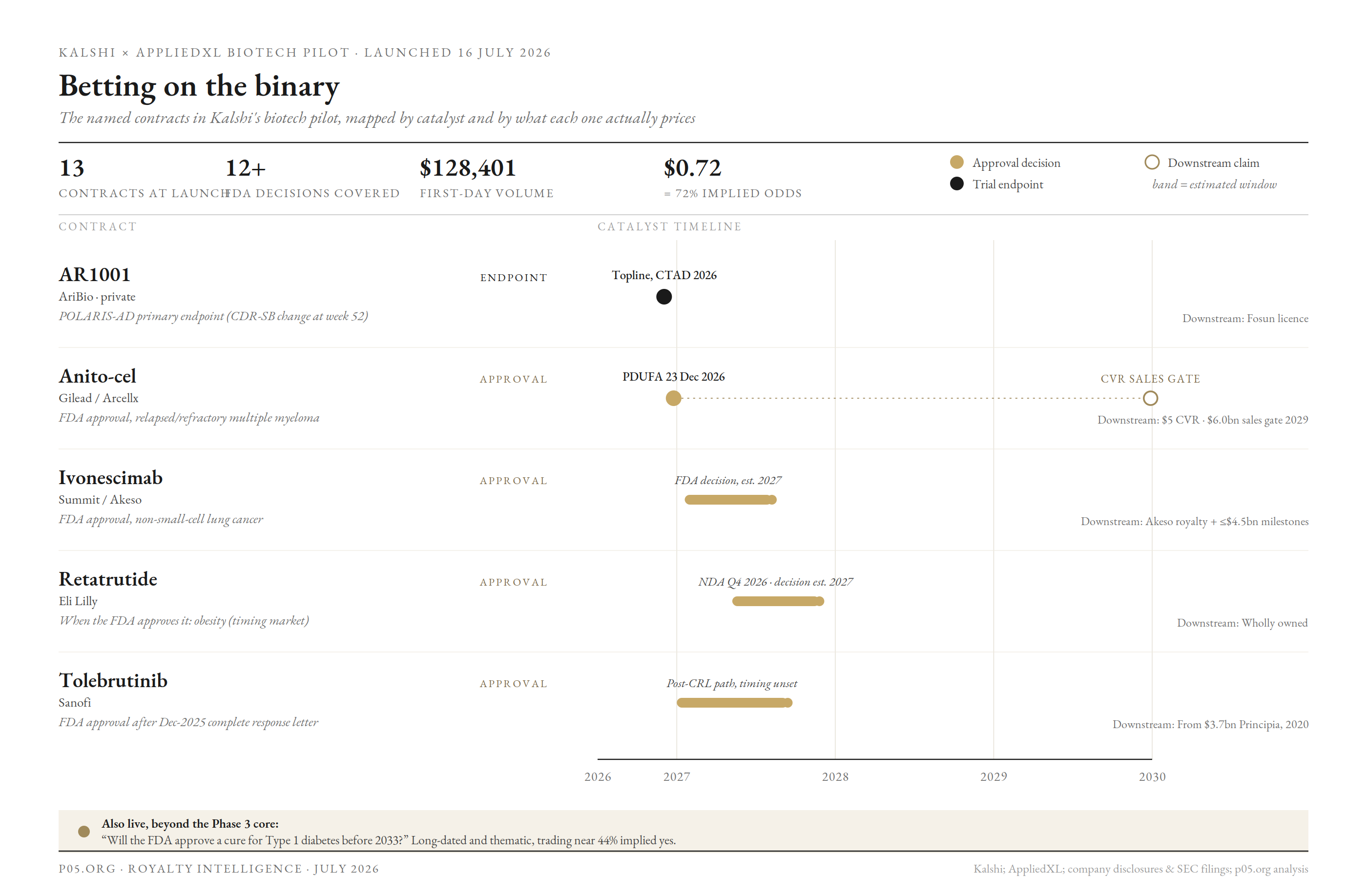
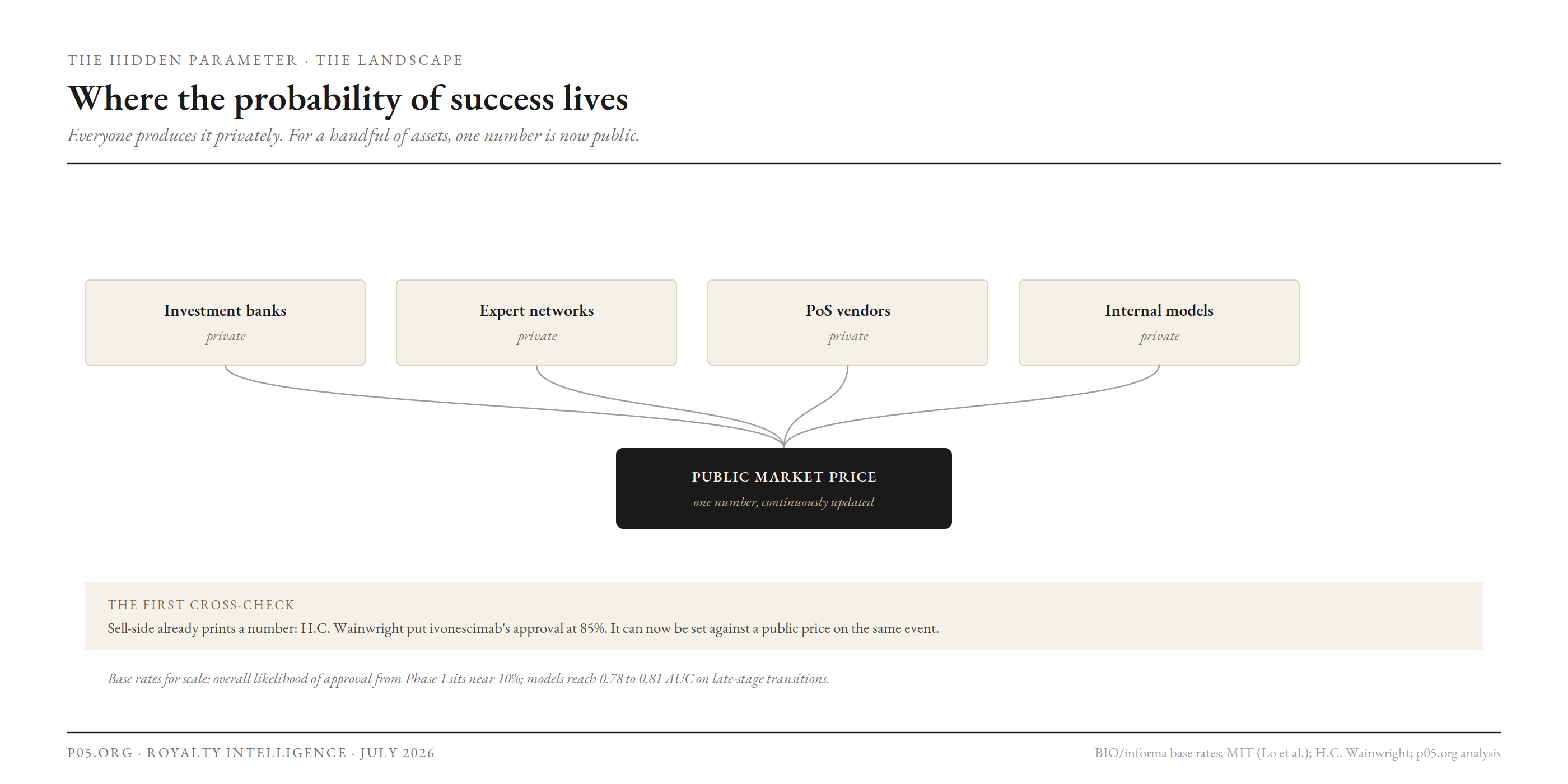
Figure 2. The named contracts, mapped by catalyst date and by what each one prices.
| Contract | Sponsor / holder | Type | Catalyst | Downstream economics |
|---|---|---|---|---|
| Anito-cel | Gilead / Arcellx | Approval | PDUFA 23 Dec 2026 | $5 CVR, gated on $6.0bn sales by 2029 |
| Ivonescimab | Summit / Akeso | Approval | FDA decision, est. 2027 | Akeso low-double-digit royalty + ≤$4.5bn milestones |
| AR1001 | AriBio (private) | Endpoint | POLARIS-AD topline, CTAD 2026 | Fosun licence |
| Retatrutide | Eli Lilly | Approval (timing) | NDA Q4 2026, decision est. 2027 | Wholly owned |
| Tolebrutinib | Sanofi | Approval | Post-CRL path, timing unset | From $3.7bn Principia deal (2020) |
| Type 1 diabetes "cure by 2033" | thematic | Long-dated | 2033 | ~44% implied yes |
Anito-cel (Gilead / Arcellx): an approval gate under a sales CVR
The contract asks whether the FDA approves this BCMA CAR-T in relapsed/refractory multiple myeloma by its 23 December 2026 PDUFA date. On efficacy it should trade rich: pivotal iMMagine-1 showed a 96% response rate, 74% complete responses. The residual risk is manufacturing and label, not the data.
The reason it matters here is the structure stacked on top. In February 2026 Gilead agreed to buy Arcellx for $115/share cash plus a $5 CVR, ~$7.8bn, closed in April. The deal wound up the old 2022 Kite profit-share and royalty. What survives is the CVR, which pays only if cumulative sales reach $6.0bn by year-end 2029.
So one asset now carries two contingent claims resolving on different events. The Kalshi contract prices the approval gate. The CVR needs approval and a commercial threshold four years out. Treating the approval price as a proxy for CVR value misprices the entire commercial ramp. More on that basis below.
Ivonescimab (Summit / Akeso): an approval gate under a live out-licence royalty
The cleanest royalty case on the board. Summit does not own the molecule: it in-licensed ivonescimab from China's Akeso for $500m upfront, up to $4.5bn in milestones, and low-double-digit royalties, later expanding the territory. At roughly $5bn it was one of the largest bispecific licences on record: Akeso took immediate cash and kept China and the rest of the world, while its future income now hangs on Summit's regulatory and commercial progress in the licensed markets.
Two structures are priced by one approval contract. Akeso holds a royalty and a milestone ladder, so a US approval is a direct gate on its income. And Summit is a single-asset company, so its equity is already a levered ivonescimab bet mixed with cash and sentiment. The contract isolates the regulatory binary the equity cannot.
It also gives a rare market-versus-model cross-check. Sell-side already publishes a number: H.C. Wainwright recently put ivonescimab's NSCLC approval probability at 85%. For the first time you can set that private estimate against a public price on the same event.
AR1001 (AriBio): a private company's endpoint, riding a subgroup
The outlier, and the most informative. This is an endpoint contract: will POLARIS-AD hit its primary endpoint, CDR-SB change at week 52, in early Alzheimer's. The trial randomised 1,535 patients; topline is planned for the CTAD conference later this year. AR1001 is mirodenafil, an oral PDE5 inhibitor repurposed from erectile dysfunction.
The wrinkle: the Phase 2 study missed its co-primary endpoints, and the whole Phase 3 rests on a pre-specified monotherapy subgroup that did show a signal. POLARIS-AD is, in effect, a bet that a subgroup from a failed trial replicates at scale.
And AriBio is private. There is no listed equity, so until 16 July there was no market signal of any kind on this asset. The Kalshi contract is the only public probability that exists for it, sitting on the most contested science of the four, with a downstream licence (Fosun's) that is otherwise invisible. This is the private-data gap made concrete.
Retatrutide (Eli Lilly): a timing market on a near-certainty
Structurally different: this asks when the FDA approves it, not whether. Retatrutide is Lilly's triple-agonist obesity drug; TRIUMPH-1 reported 28.3% average weight loss at 80 weeks, with an NDA expected in Q4 2026.
For a royalty reader the interest is the isolation. Lilly is a trillion-dollar company; retatrutide is wholly owned. Its equity tells you almost nothing about the drug's specific timeline. A dated contract does. It is the purest illustration of a prediction market pulling one catalyst out of a mega-cap balance sheet.
Tolebrutinib (Sanofi): an approval after a rejection
Launch coverage named only "Sanofi." The natural referent is tolebrutinib, so this carries a caveat the others do not. The FDA issued a complete response letter for it in non-relapsing secondary progressive MS in December 2025 on safety, while Europe gave a positive opinion in April 2026. It came from Sanofi's ~$3.7bn 2020 Principia acquisition.
Whatever the specific drug, the archetype is the valuable one. An approval contract written after a CRL prices a second bite: a resubmission or appeal. That is exactly where a royalty or milestone holder is most in the dark, and it sits squarely on the post-miss opportunity set.
The remainder, and the outlier
Roughly nine contracts were not individually named, described only as FDA approval decisions on large sponsors' late-stage assets. They will cluster on well-followed catalysts, which is where a public price adds least. Separately, a long-dated "will the FDA approve a Type 1 diabetes cure before 2033" market trades near 44% implied yes, thematic rather than a single Phase 3 read.
The hidden parameter
Strip a synthetic royalty, a milestone, an approval-gated CVR or a minimum guarantee to its skeleton and the same variable sits at the centre: the probability a binary resolves in the money. It decides whether a pre-approval royalty is worth forty cents or four on the approved-case value.
That number has never been market-observable. It is produced constantly and privately: banks build it into comps, expert networks sell it by the hour, vendors like Intelligencia model it. The MIT group around Andrew Lo has shown models can reach 0.78 to 0.81 AUC on late-stage transitions. Every one of them private.
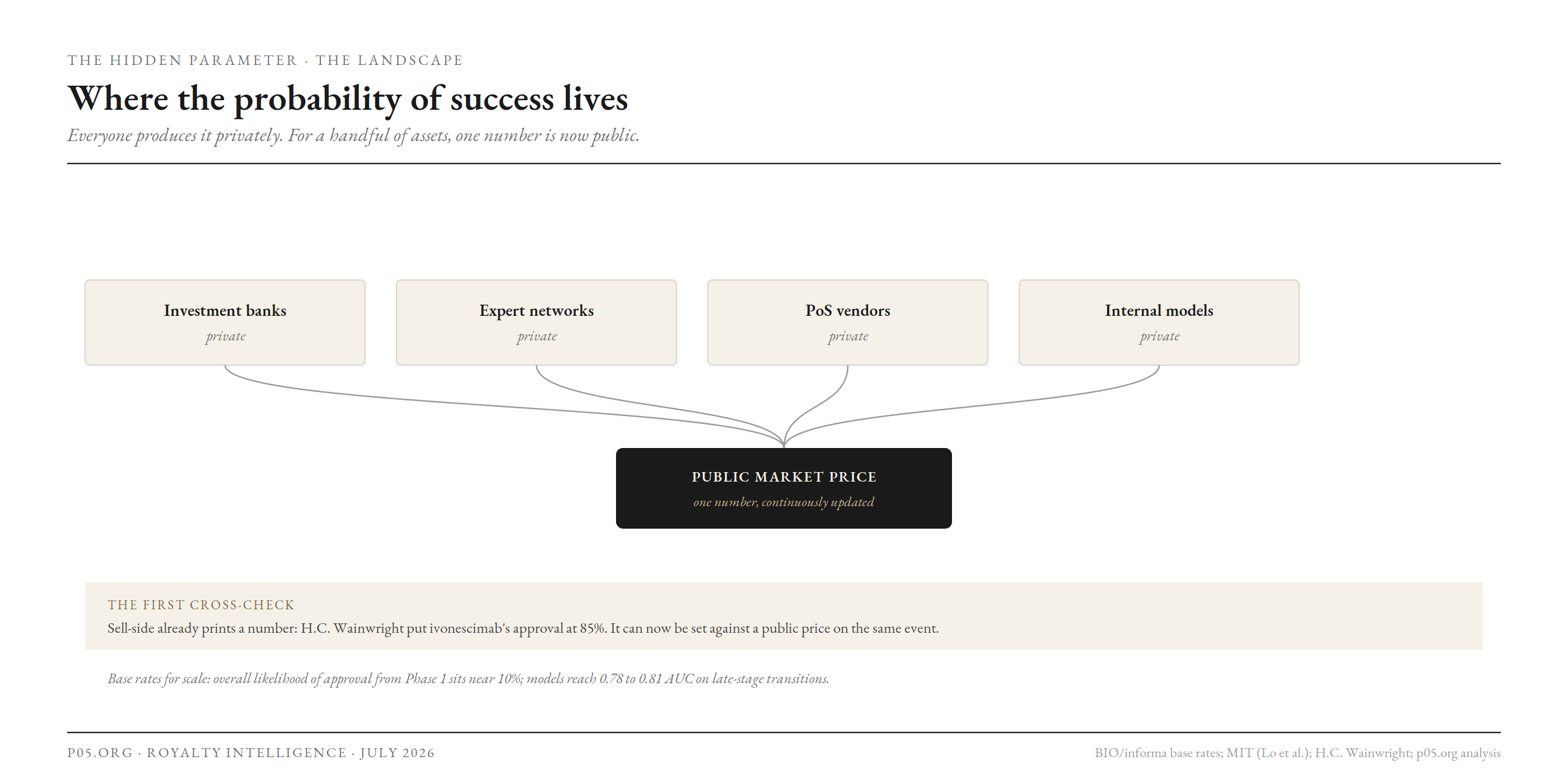
Figure 3. Everyone produces the probability privately; for a handful of assets, one number is now public.
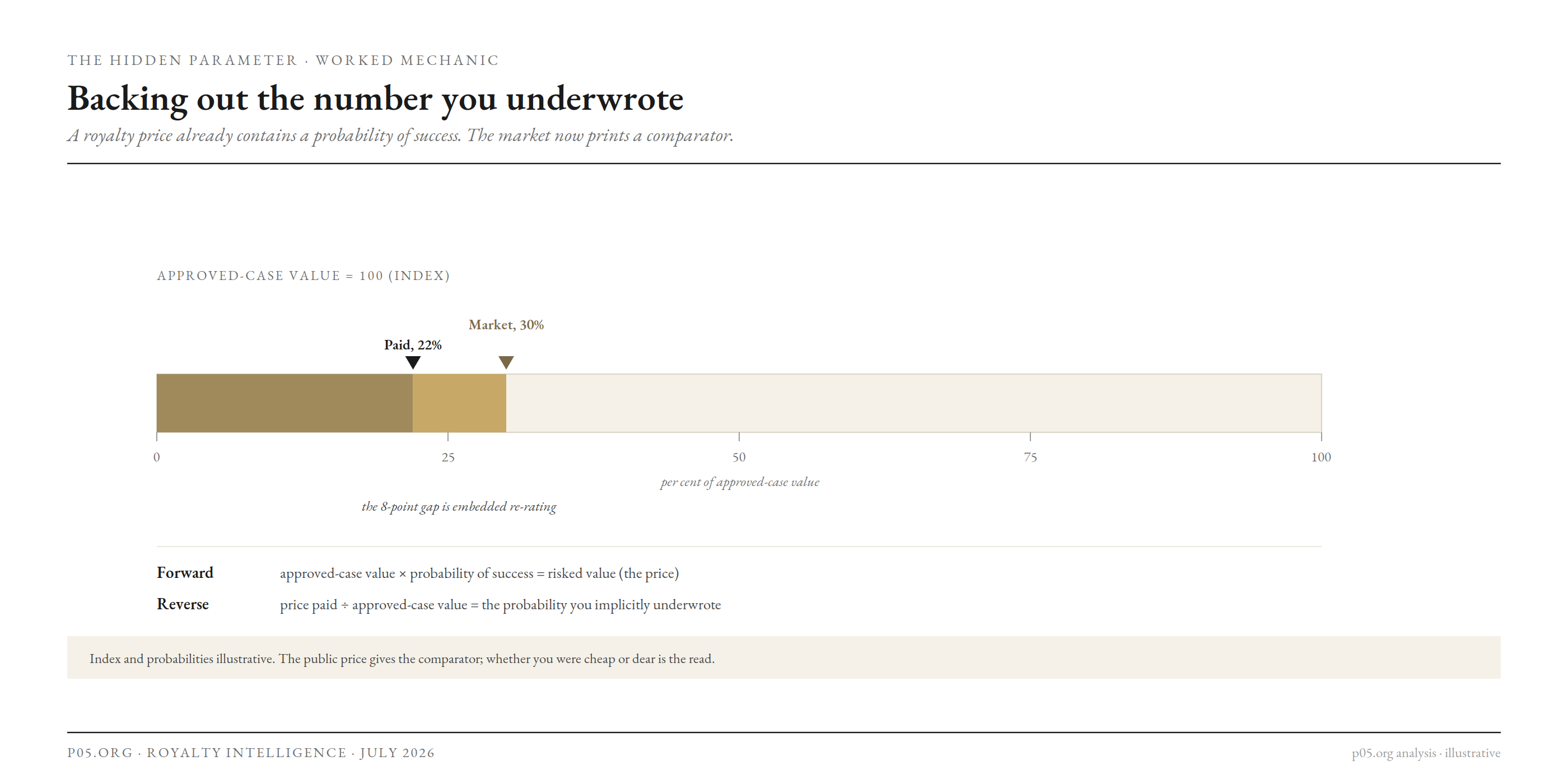
Figure 4. A royalty price already contains a probability of success; the reverse calculation recovers it.
What "printed" buys differs by case. For anito-cel it is a near-consensus approval odds, useful mainly as a mark for the CVR beneath. For ivonescimab, a gate on Akeso's royalty, checkable against an 85% sell-side number. For the Sanofi contract, a probability on a post-CRL path with no clean comparator. For AR1001, the only public probability that exists on a private asset.
The value of the printed number is highest where everything else is darkest, which is not the mega-cap approvals but the private endpoint and the post-rejection path.
The anito-cel CVR shows why the public price only solves half the problem.
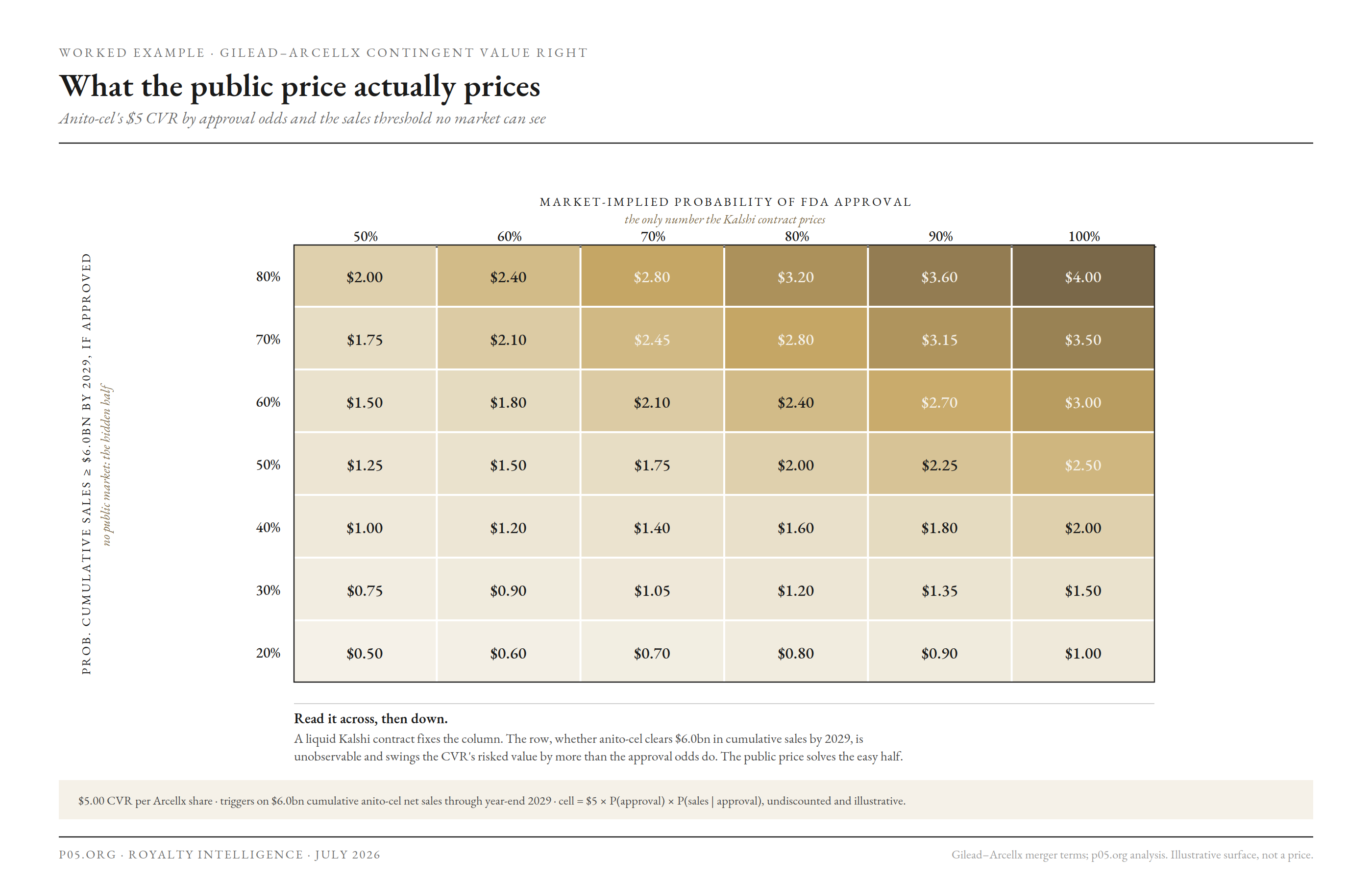
Figure 5. The $5 CVR's risked value across approval odds (priced by Kalshi) and the sales threshold (no public market). The hidden axis moves the number more.
Read it across, then down. A liquid contract fixes the column, the approval odds. The row, whether anito-cel clears $6.0bn in cumulative sales by 2029, is unobservable and swings the risked value by more than the approval odds do. The public price solves the easy half.
Four uses for a royalty desk
Price discovery and marking, via ivonescimab. A pre-approval royalty has no observable price until the event. A public approval probability gives an external mark, and lets you back out the probability you implicitly underwrote: pay X for a stream whose approved-case value you can model, and X over that value is your implied odds.
Check it against the market and the 85% sell-side print. Caveat: thirteen large-cap contracts is not a yield curve, and the sub-$50m streams are off the board.
Hedging binary exposure, via anito-cel. A holder of an approval-gated CVR carries risk that is otherwise unhedgeable without shorting the whole company. In principle a "no" position offsets it. In practice: liquidity too thin for size, huge basis (the contract resolves December 2026, the CVR on 2029 sales), position limits, and the optics of an originator betting against an asset it structured. That last is a governance question, not a footnote.
Sourcing and screening, via AR1001. A public probability is a free validation layer, most valuable where data is thinnest: private developers. AR1001 is the demonstration, a pivotal readout with a public number on a company with no equity to read. Caveat: the established-sponsor scope limits how far down the size curve this reaches.
The compression of edge, the other way. The royalty edge was often knowing the probability better, through expert networks and proprietary reads. A public, efficient number compresses exactly that, and AR1001, a subgroup-replication call, is where the tension bites. The consolation: the durable edge was never the binary. It was structuring, seniority and ramp modelling, none of which this touches.
Insider trading, and why the architecture is not the one you think
The legal regime is not securities law, and the difference bears on any fund whose diligence touches trial insiders.
These are event contracts on a CFTC-designated market, so the rule is the Commodity Exchange Act §6(c)(1) and Regulation 180.1, read as a misappropriation-based fraud rule. Liability turns on trading in breach of a pre-existing duty of trust owed to the source of the information. The CFTC asserted this authority in February 2026 and brought its first event-contract insider case in April 2026.
Now map that onto the two archetypes, because they are not equally exposed.
- Approval contracts (anito-cel, ivonescimab, the Sanofi drug) resolve on an FDA action learned by a contained set of people during review.
- Endpoint contracts (AR1001) resolve on the trial's own result, where the population holding inside information is investigators, site staff, statisticians and monitors during unblinding.
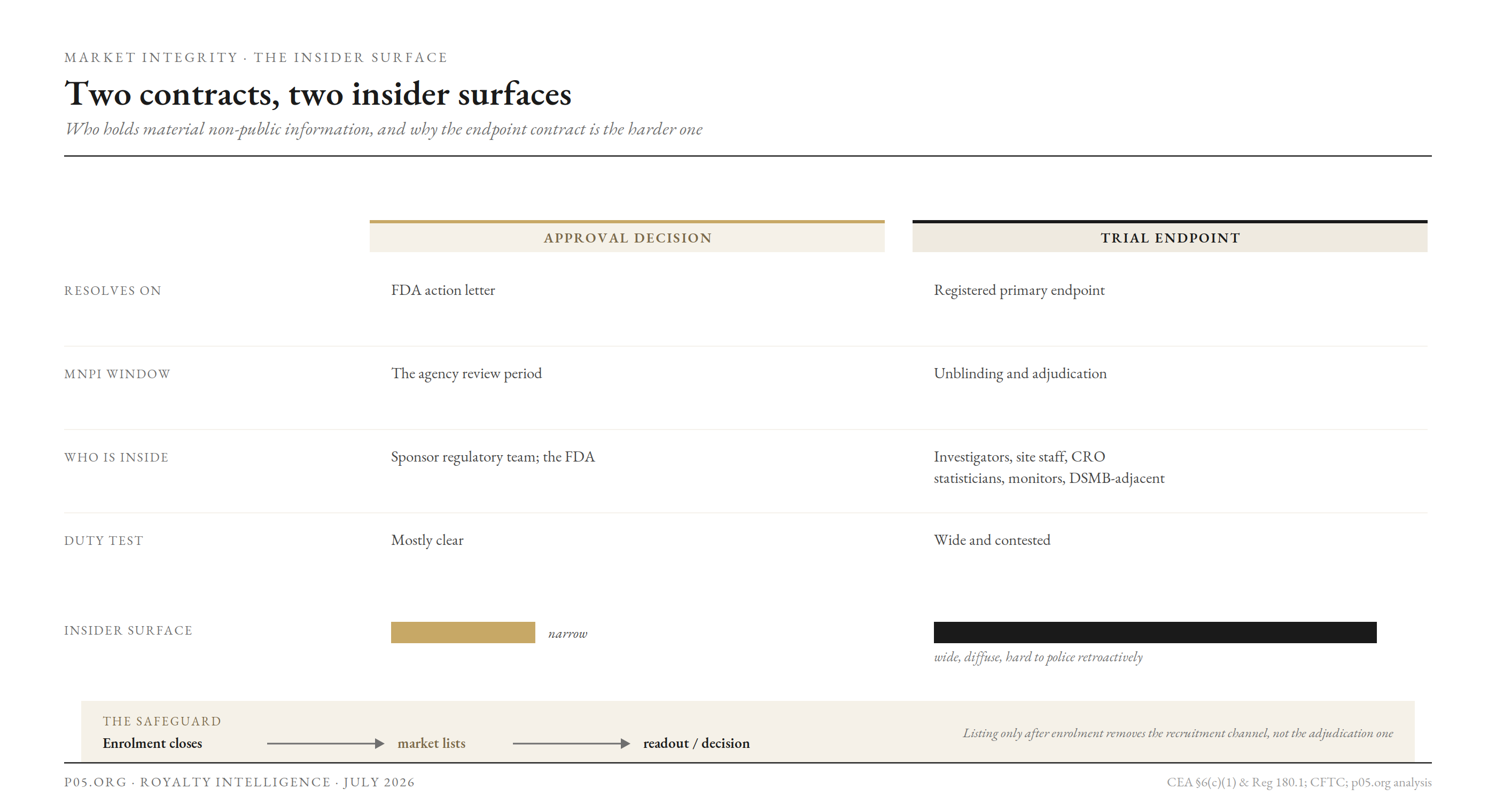
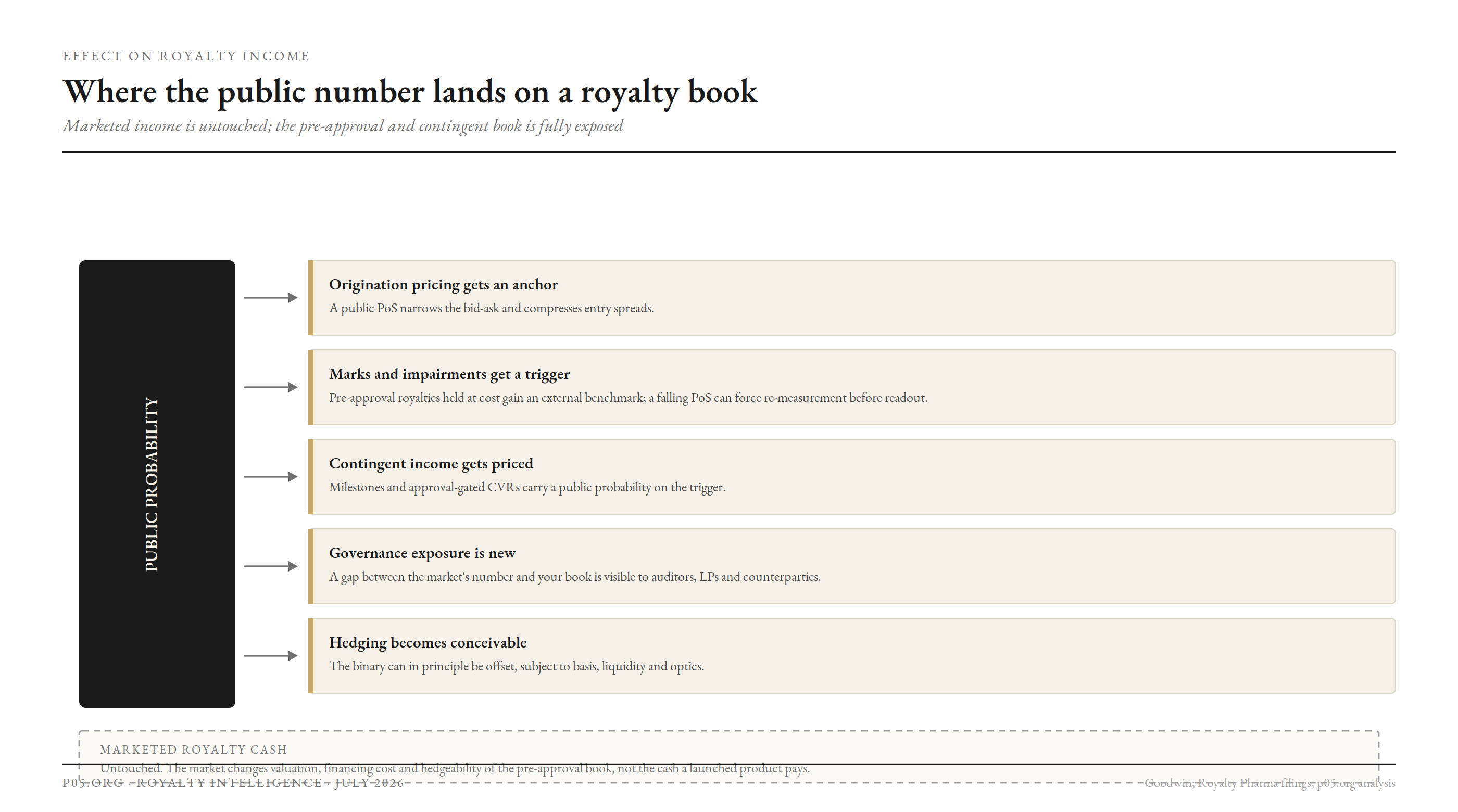
Figure 6. The endpoint contract carries the wider, harder-to-police insider surface.
The endpoint archetype carries the widest, most diffuse insider surface, which is why the pilot lists only after enrolment closes. AR1001, riding a contested subgroup, is where a single site's partial view of responders is worth the most.
The duty test is where it turns unsettled. A sponsor employee owes a clear duty. The periphery does not, cleanly: a site nurse, a contract monitor, a CRO statistician, a DSMB member's household. Several hold real signal, and whether each owes a duty to the sponsor is contested. The CFTC has opened rulemaking on exactly this gap.
The expert-network precedent
This has happened before, in Alzheimer's, through an expert network.
In 2008 Dr Sidney Gilman chaired the safety monitoring committee for the Phase 2 trial of bapineuzumab, an Alzheimer's drug from Elan and Wyeth, and was chosen to present its results publicly. Through the expert network GLG, at $1,000 an hour across 42 consultations, he fed the negative data to SAC Capital's Mathew Martoma about two weeks early. SAC sold and shorted roughly $960m of Elan and Wyeth and booked about $276m, the largest insider-trading case charged at the time. Martoma got nine years; Gilman cooperated.
GLG itself was not charged. The two had circumvented its controls: scheduling calls around committee meetings, misrepresenting the topics, and trading despite a confidentiality agreement and GLG's explicit instruction that the Alzheimer's trial was off-limits.
Three things make the Kalshi version harder, not easier:
- Same cast, shorter path. Martoma needed two steps, obtain the tip then trade Elan and Wyeth equity. On Kalshi the endpoint contract is the position. The AR1001 market is the bapineuzumab set-up with the equity leg removed.
- Different law, less tested. Martoma was prosecuted under securities law. A Kalshi contract runs on CFTC Reg 180.1, and the pattern of a clinician tipping for a prediction-market trade has not been litigated.
- The walls were built for equities. After 2012 the expert networks built filters for public-company insiders, topic monitoring and annual attestations. A contract on a private company's trial, like AriBio's, can sit outside those filters entirely.
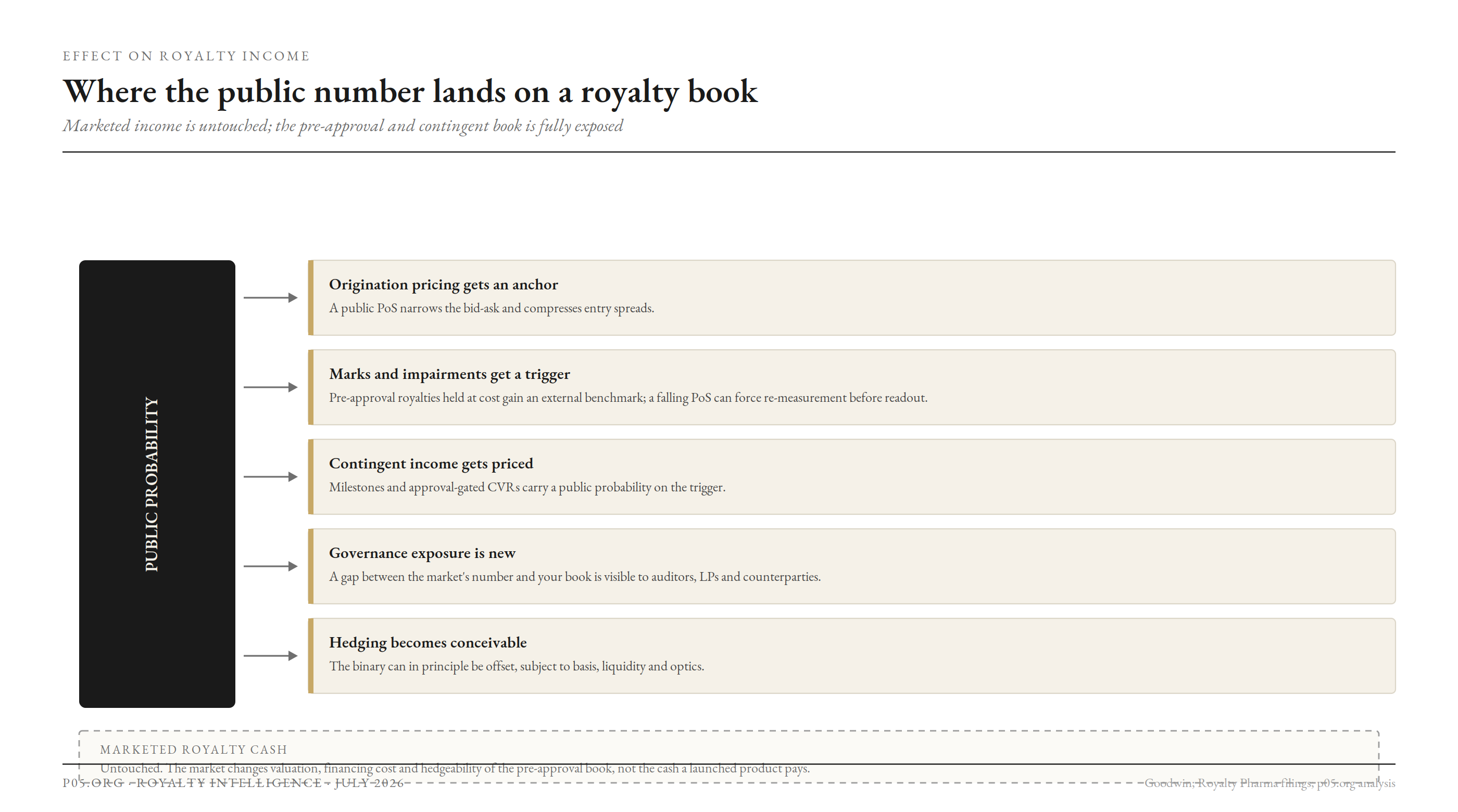
Figure 7. The 2008 bapineuzumab case, and the same set-up with the equity leg removed.
Three consequences for a royalty investor, none about whether the fund itself bets:
- The compliance perimeter is new. A fund running expert-network and KOL diligence sits close to trial-adjacent information, and many of its paid experts are trial participants. The moment such a fund could trade these contracts, its information-barrier design must cover a venue most corporate policies do not yet mention.
- Enforcement is retrospective, so it is an asset-quality risk. Misappropriation is found after the fact, by which point the trial may be compromised. If you hold a royalty on that trial, the feedback loop is your problem regardless of any charge.
- The patient-hedging framing cuts toward holders. The CFTC chair has floated letting patients hedge treatment costs. A contract that hedges a treatment you await is structurally the one that hedges a payoff you await. Whether regulators accept the second use, having blessed the first, will shape who is allowed in at size.
What the room is saying
The split is real, and named.
- For it: Kalshi's Tarek Mansour frames the markets as surfacing locked-away information; the CFTC's Michael Selig has floated patient hedging as a public benefit; and the idea is not new, Eli Lilly ran an internal pipeline prediction market two decades ago. The whitepaper's case is an incentive-aligned external estimate that sharpens capital allocation.
- Against it: bioethicists and trial researchers told STAT the incentive could push people with influence over a study to alter or delay decisions, and worry about peripheral access, site administrators and junior data analysts. Mayo's Nicholas Zaorsky notes enforcement is retrospective, so a tainted trial stays tainted.
- The lawyers: counsel at Davis Wright Tremaine flag that the SEC may claim overlapping jurisdiction where a contract resembles a security-based swap, and that most corporate insider-trading policies do not yet mention prediction markets at all.
How this could go
Constructive. Resolution proves clean, liquidity deepens, and a public probability-of-success curve becomes a reference input for pre-approval royalty and CVR pricing: a rough reference rate for binary biopharma risk. The hedging use becomes practical for the largest catalysts.
Sceptical. Liquidity stays where it lives, over 85% in sports. Biotech contracts cluster on catalysts the sell-side already covers, adding little where originators operate. Basis risk keeps the hedge imperfect. It becomes a curiosity that prints an interesting number nobody underwrites against.
The regulatory wildcard. If the SEC and CFTC treat company-specific approval and deal contracts as security-based swaps, the population allowed to trade them, and the rules, change materially. For any fund contemplating use, that jurisdictional question is the first diligence item, not background.
What a public probability does to royalty income
The cash a royalty throws off after approval is untouched by any of this. What changes is the valuation, financing cost, mark and hedgeability of everything before the binary resolves, and that is where the money increasingly sits.
The context: surveys put nearly 90% of biotech executives weighing a royalty financing within three years, and the structures have moved pre-approval, into R&D co-funding, milestone and CVR-linked notes, and synthetic royalties on assets that have not launched. Royalty Pharma alone carries about $1.4bn of unapproved royalty assets at cost. Every one of those is a probability of success waiting for a number.
Figure 8. Marketed income is untouched; the pre-approval and contingent book is exposed.
Five effects follow:
- Origination pricing gets an anchor. Today the buyer and the developer each hold a private PoS. A public one narrows the bid-ask and compresses entry spreads: easier for the developer, tighter for the investor.
- Marks and impairments get a trigger. A pre-approval royalty held at cost now has an external benchmark. A public PoS that falls can force re-measurement or impairment before the trial even reads out. The impairment is not the loss, but it lands on the income statement all the same.
- Contingent income gets priced. Milestones and approval-gated CVRs, increasingly the shape of these deals, now carry a public probability on their trigger.
- Governance exposure is new. If Kalshi prices an asset at 35% and your book implies 60%, that gap is visible to auditors, LPs and counterparties, and it is now arguable.
- Hedging becomes conceivable. A holder can in principle offset the binary, subject to the same basis, liquidity and optics limits already noted.
None of this touches a marketed royalty. All of it touches the pre-approval and contingent book, which is exactly where origination has been migrating.
The number is now public
The pilot retires a comfortable fiction: that the probability of success is unknowable, and therefore a durable edge. For the assets on the board it is now a printed number, and the two that matter, the private endpoint and the post-rejection path, are exactly where a desk used to sell its judgement.
The work that remains is everything the binary does not capture: seniority, ramp, label, the private streams the syndicated data never saw, and the structuring that turns a probability into a defensible price. A public probability is a comparator for that work. It is not a substitute for it.
All information in this report was accurate as of the research date and is derived from publicly available sources including court opinions, regulatory guidance, academic literature, SEC filings, and financial news reporting. Information may have changed since publication. This content is for informational purposes only and does not constitute investment, legal, or financial advice. The author is not a lawyer or financial adviser.